Biography
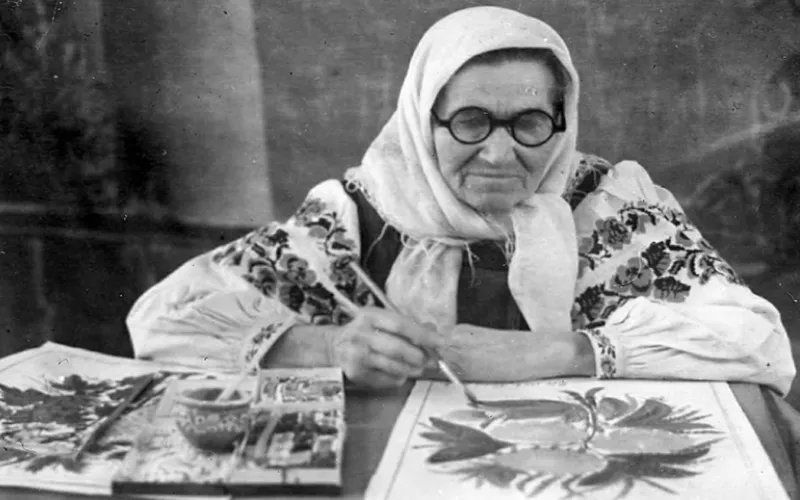
Tetiana Yakymivna Pata was born on February 20, 1884, in Petrykivka — into a poor family with eight children. From the age of fourteen, she earned her living through painting: she would decorate chimneys for holidays and weddings, and paint wooden chests. After marrying carpenter Leontii Pata, she worked alongside him — he crafted the chests, she painted them.
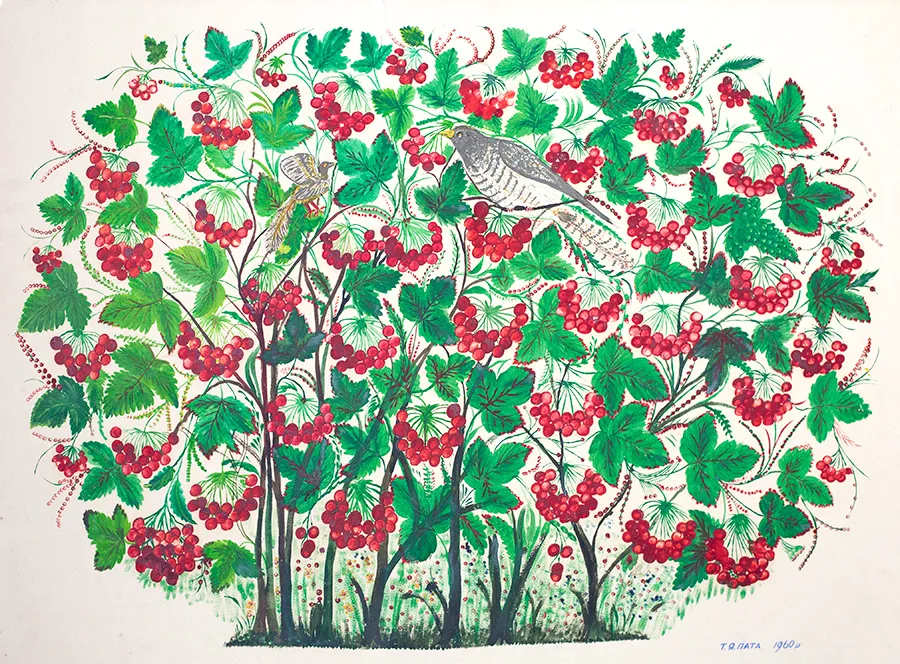
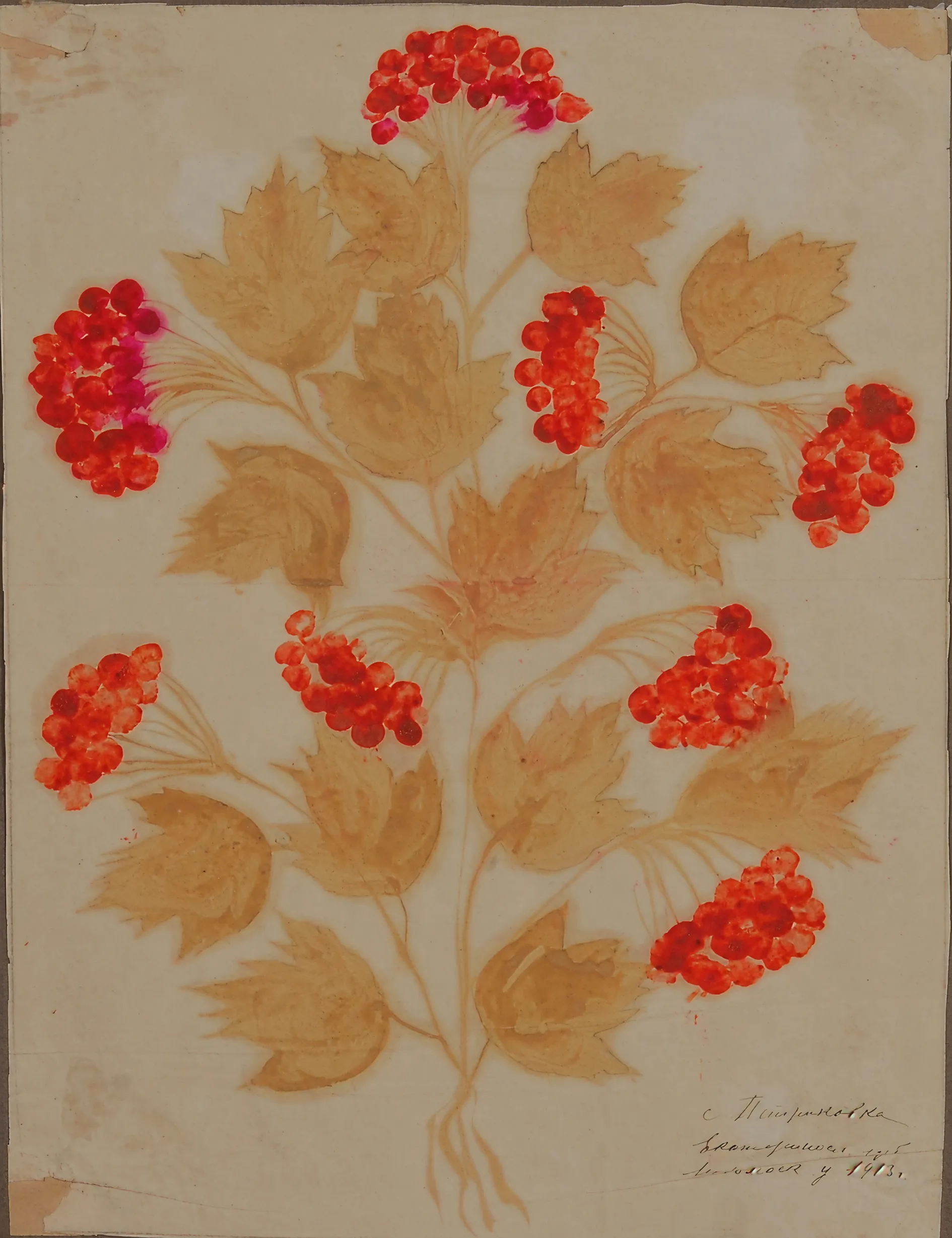
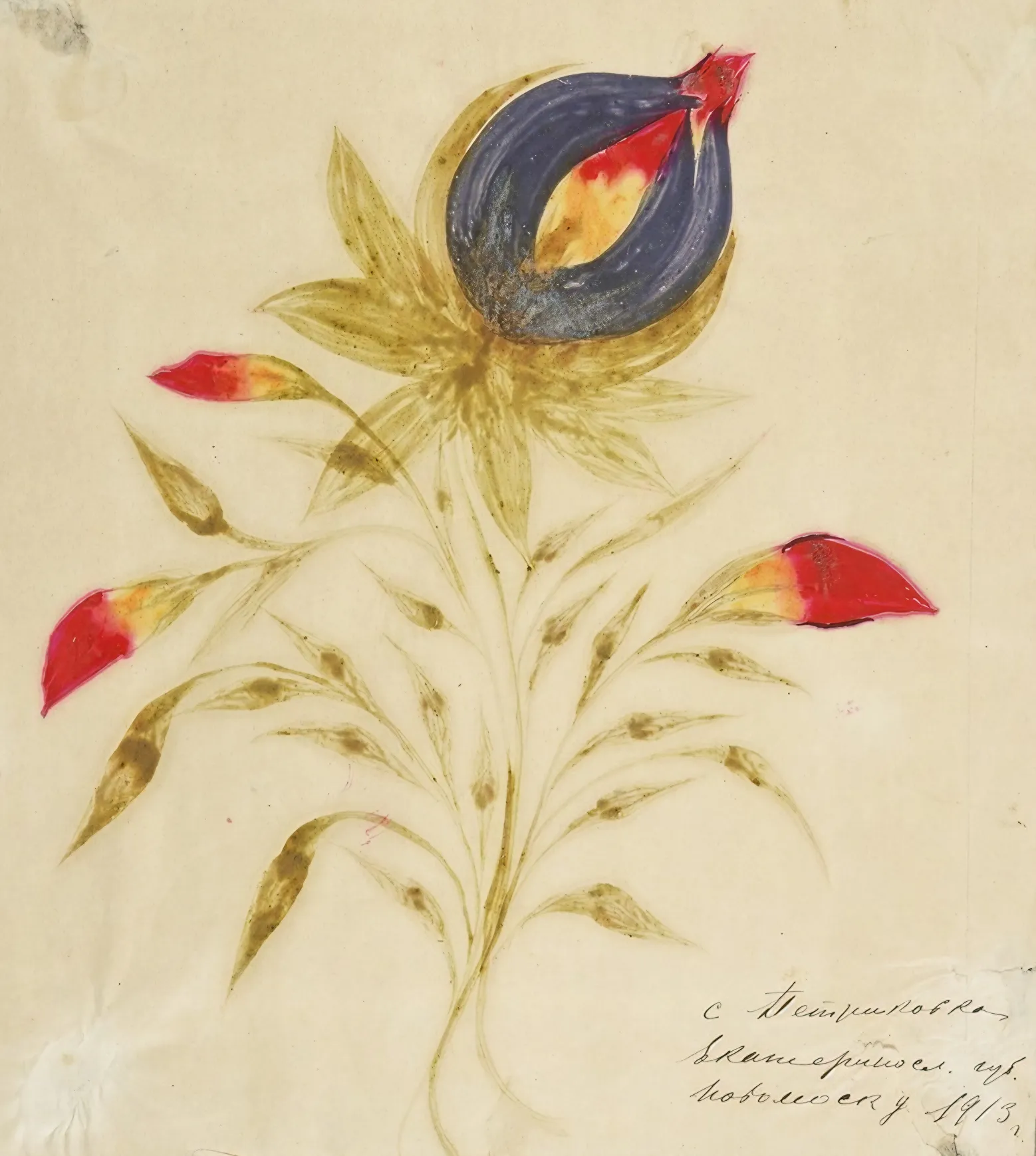
After her husband’s death in 1914, she raised four children on her own, never putting down her brush. It was during those years that she developed her own style: introducing asymmetry, abandoning small repetitive ornaments, and filling large surfaces with wreaths and carpets of flowers. Her early works gave rise to such leading motifs of Petrykivka painting as the “tsybulynka” (onion), “kucheriavka” (curl), “vynograd” (grape), “kalyna” (viburnum), and “ptakh na kalyni” (bird on viburnum).
In 1925, commissioned by Dmytro Yavornytskyi, she created a carpet and two chimney painting sketches for the Dnipropetrovsk Historical Museum. In 1936, as part of the Petrykivka delegation, she traveled to Kyiv for the First Republican Exhibition of Ukrainian Folk Art, which was later shown in Moscow and Leningrad. That same year, the School of Decorative Painting was established in Petrykivka, and Tetiana Pata became its principal teacher. By 1941, the school had graduated four classes, launching an entire generation of renowned masters.
She passed away on December 7, 1976, in her native Petrykivka.
Artistic Legacy
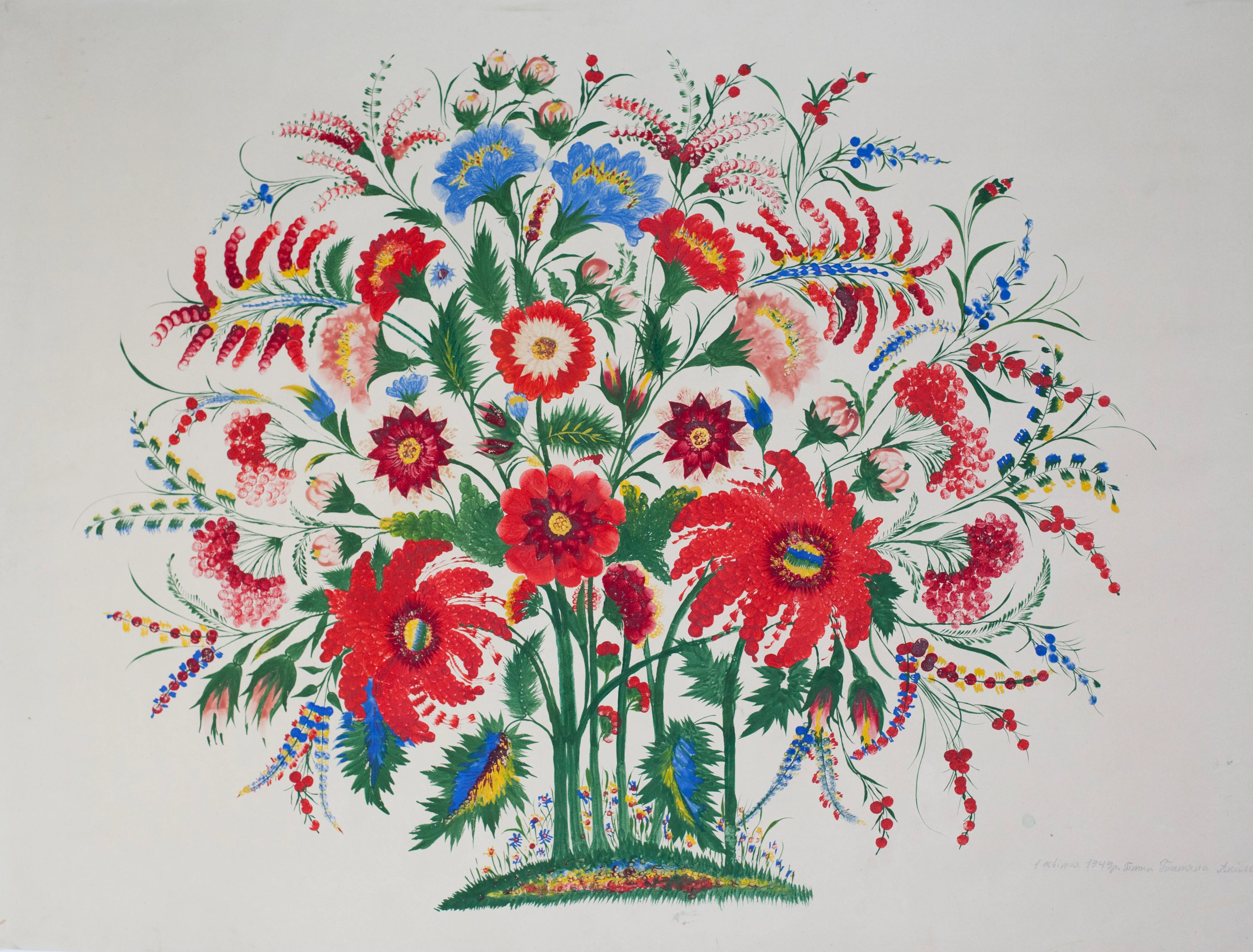
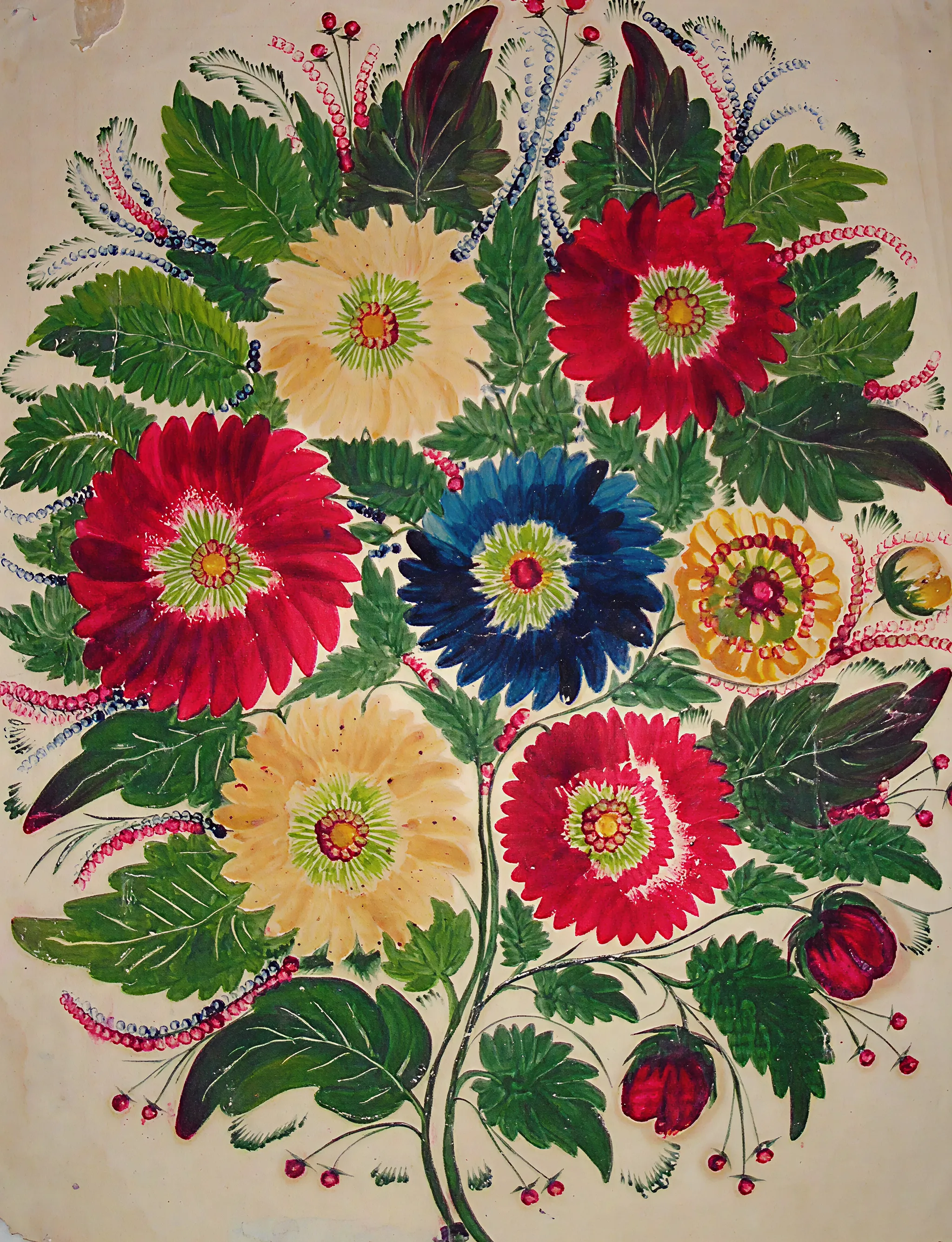
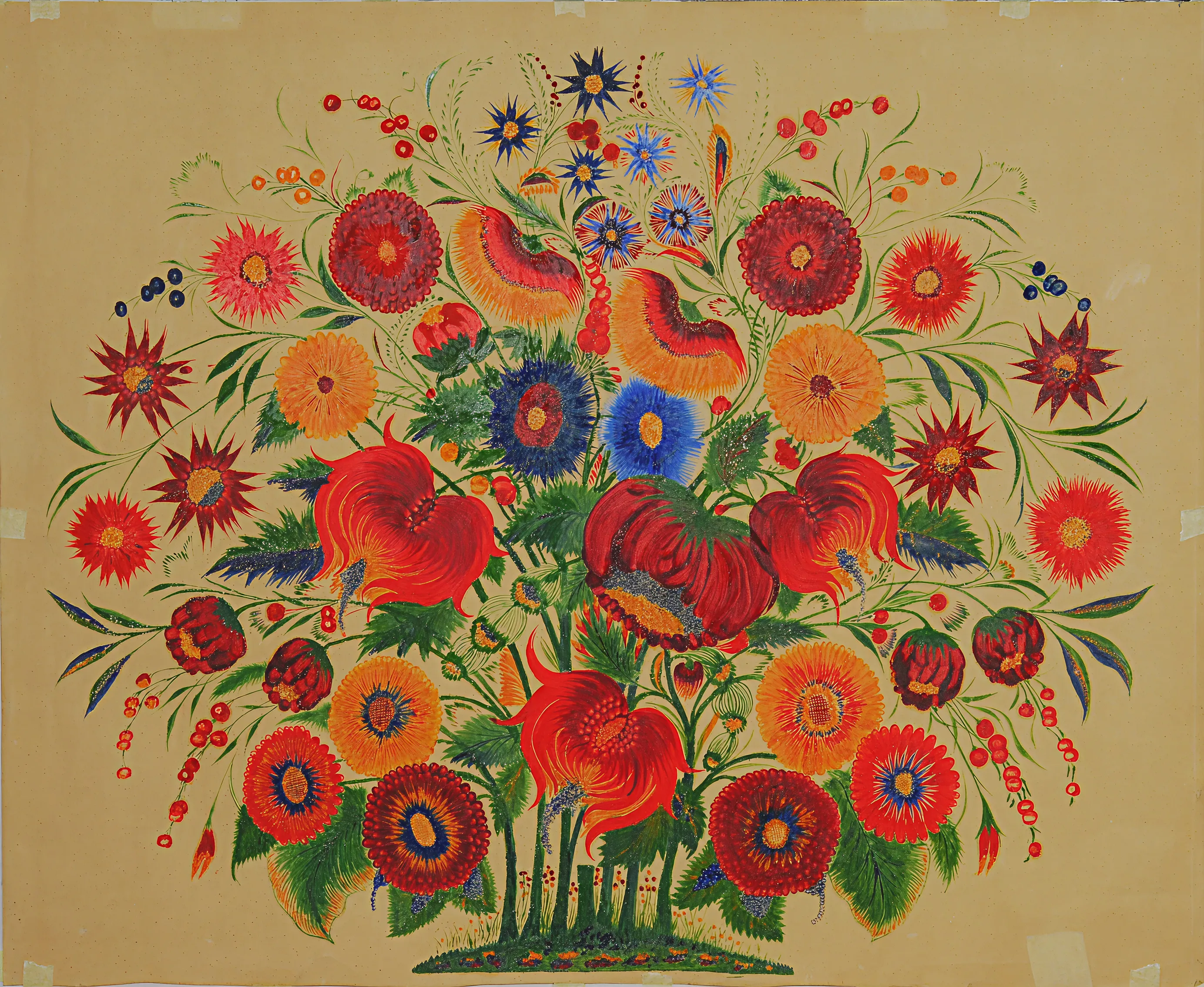
Tetiana Pata primarily painted floral bouquets and ornamental plant panels — yet no two compositions ever repeated in structure or motifs. Her drawing is delicate and refined, her colors selected intuitively but always natural: red, yellow, green, blue, pink. It was she who introduced fundamentally new qualities to Petrykivka painting — asymmetry and de-ornamentation — transforming folk decoration from applied craft into an independent art form.
Among her most famous works: “Green Chest” (1928), “Family Portrait,” “Viburnum Bush,” “Panel with Birds,” “Flowers. Panel,” “Dahlias,” “Roses,” and “Viburnum.” In 1935, she completed seventeen ornamental panels for the auditorium of the Kyiv Art Institute.
Recognition
From the late 1930s onward, she was a regular participant in regional, republican, all-union, and international exhibitions. In 1950, she was admitted to the Union of Artists of Ukraine. In 1962, she received the title “Honored Master of Folk Art of the Ukrainian SSR.” She was awarded the Order of the Red Banner of Labour and the Medal for Labour Distinction. A street in the city of Dnipro is named in her honor.