Biography
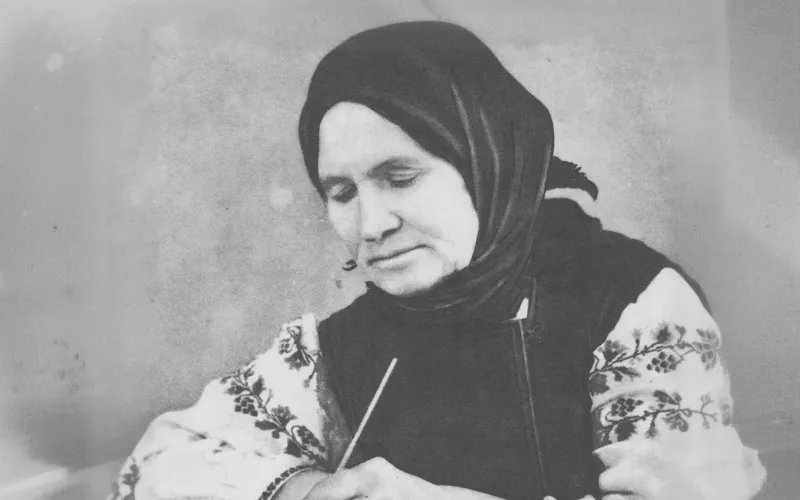
Nadiia Avramivna Bilokin was born on September 20, 1893, in Petrykivka, to a poor peasant family with many children. She started painting at the age of twelve, watching her mother decorate the house with “malyovky”. At the age of fourteen, she was already earning her own money: selling her drawings at the market and painting houses to order. She did not receive any formal education - her only teacher, in her own words, was “the magical Ukrainian nature with wide fields, green meadows, fragrant groves and lush flowers.”
In 1920, a local art teacher, Oleksandr Statyva, took notice of her work and provided her with paints and paper, encouraging her to work. After 1929, when the family joined the collective farm, she painted less often, as she had to take on any job.
In 1935, Bilokin was invited to Kyiv to work with a group of Petrykivka artists to prepare the First Republican Exhibition of Folk Art at the Central Experimental Workshops at the Kyiv Museum of Ukrainian Art. The exhibition was a great success, and the artist was awarded the title of Master of Folk Art of the Ukrainian SSR. In 1962, she became a member of the Union of Artists of Ukraine.
After the death of her husband in the war, she was left alone with five children, without a home and without material support. These circumstances pushed her away from official artistic structures, but did not stop her creativity. She died on February 5, 1981, in the village of Radisne in the Dnipro region.
Artistic Practice
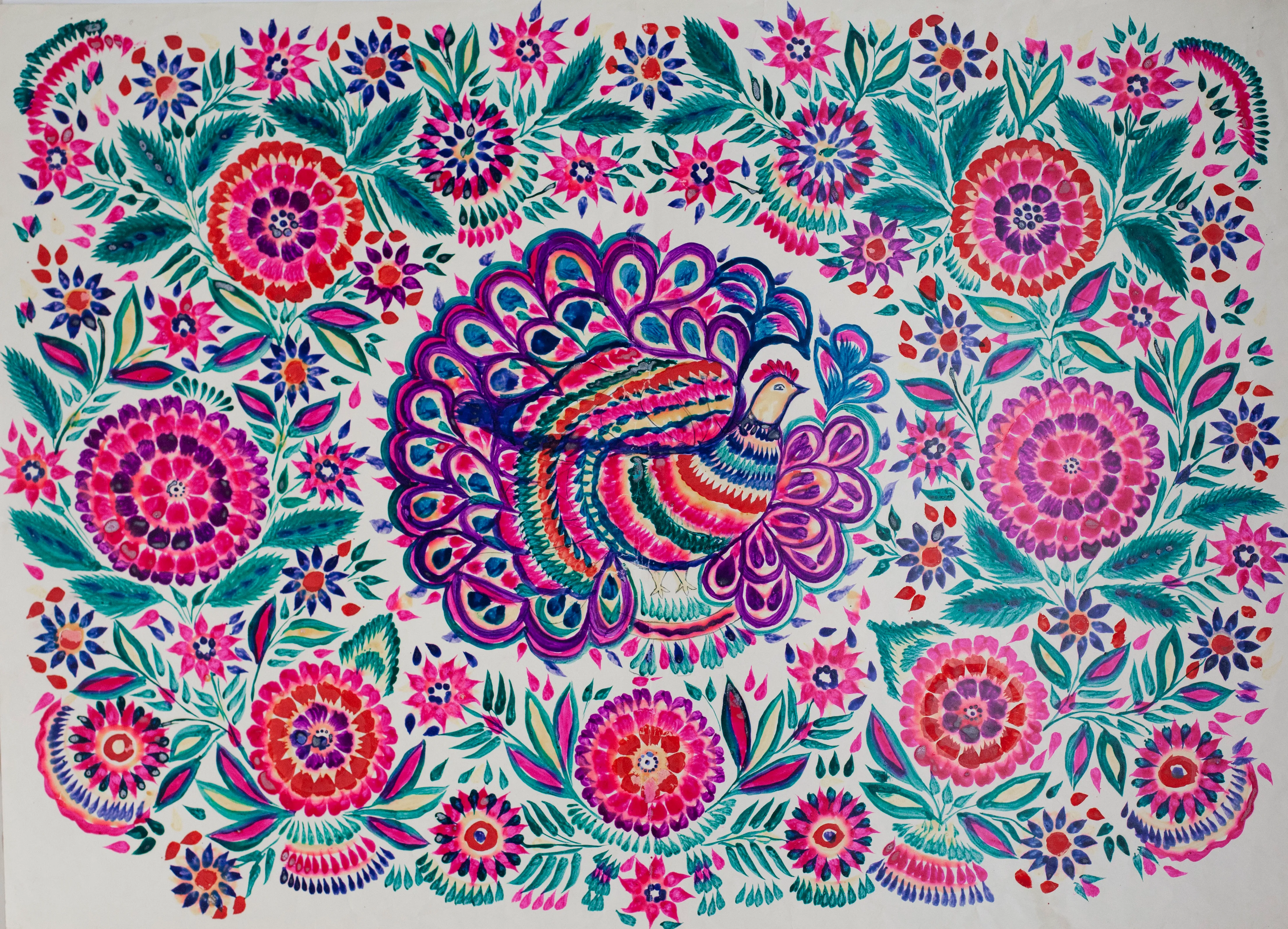
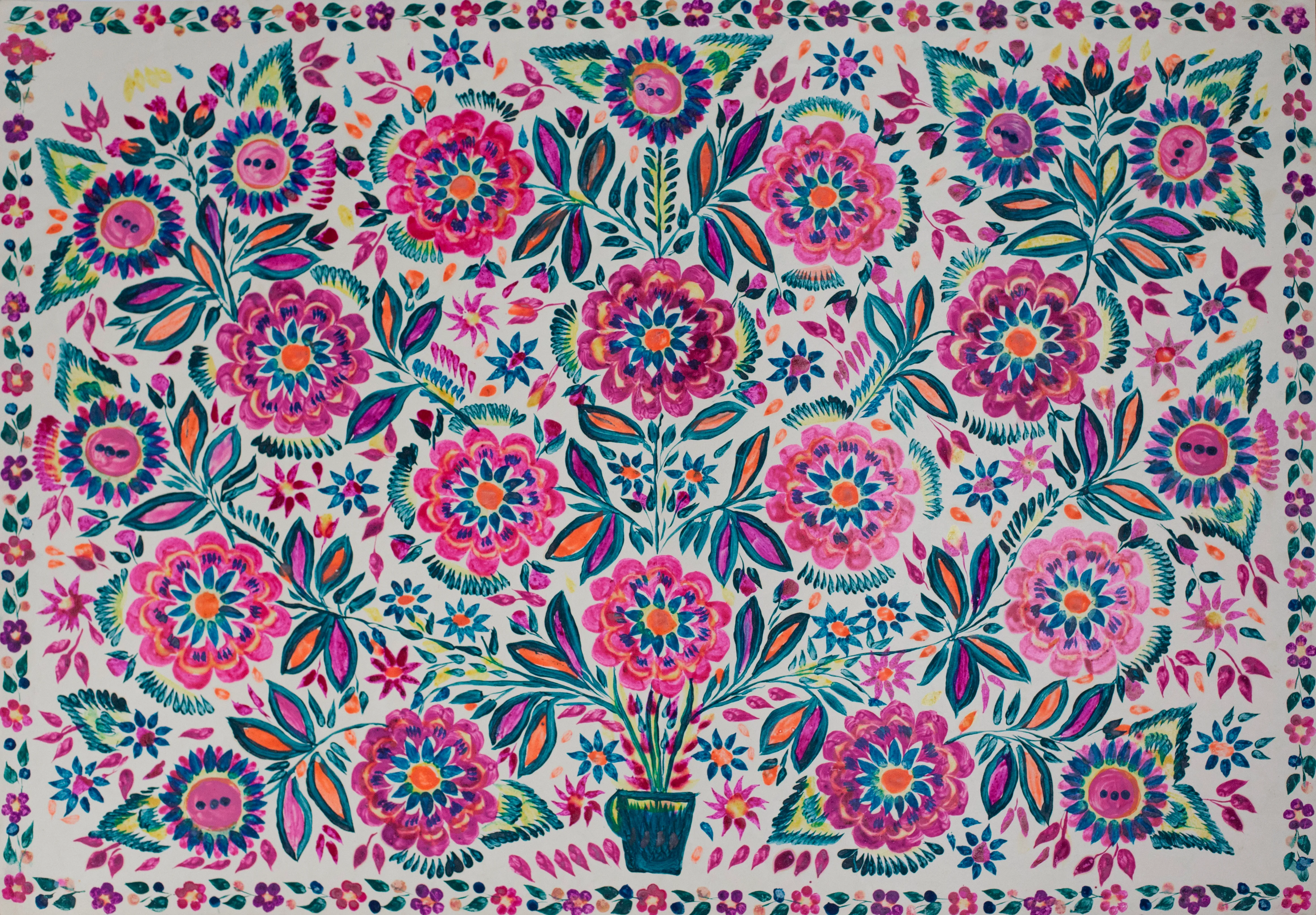
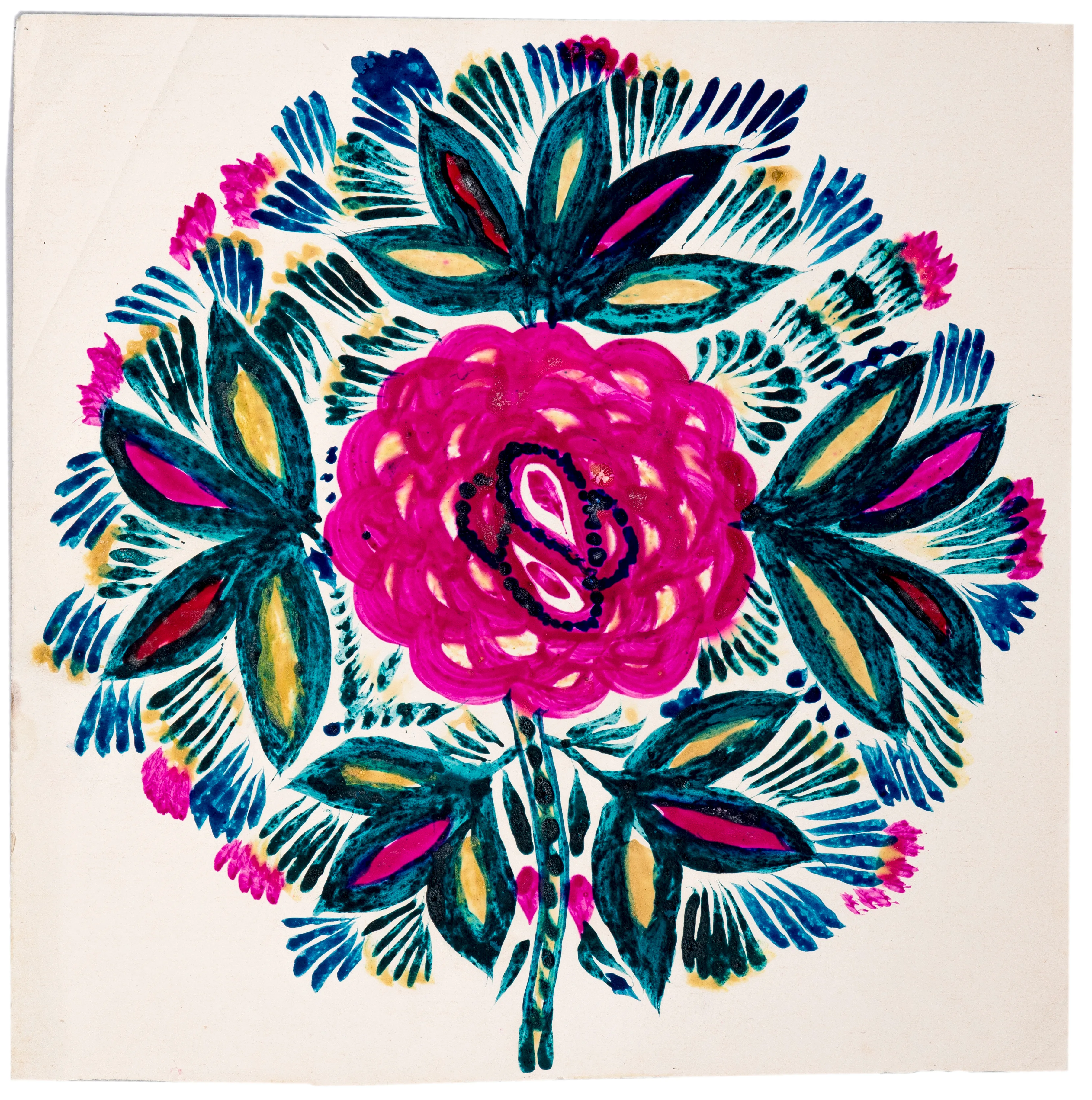
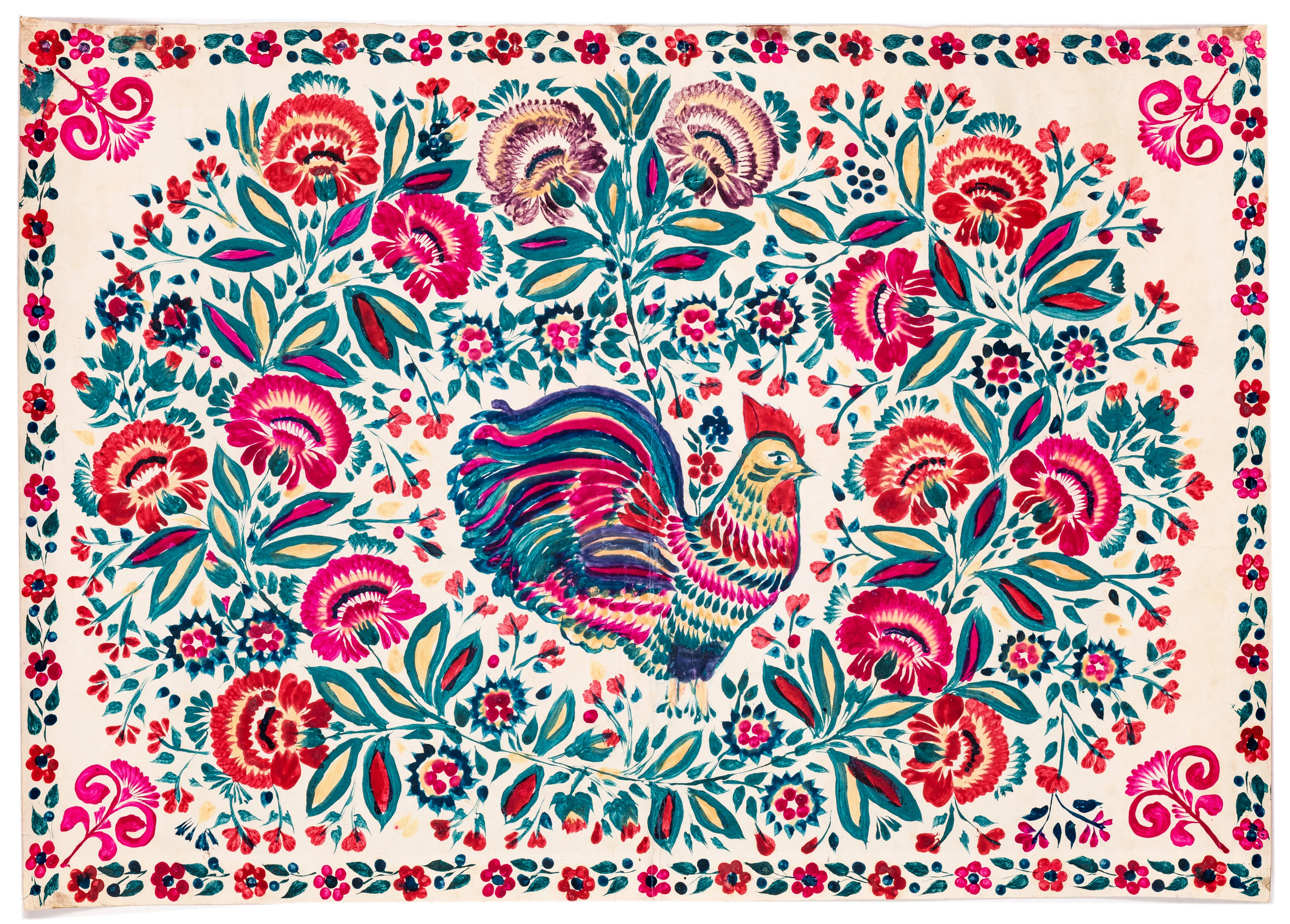
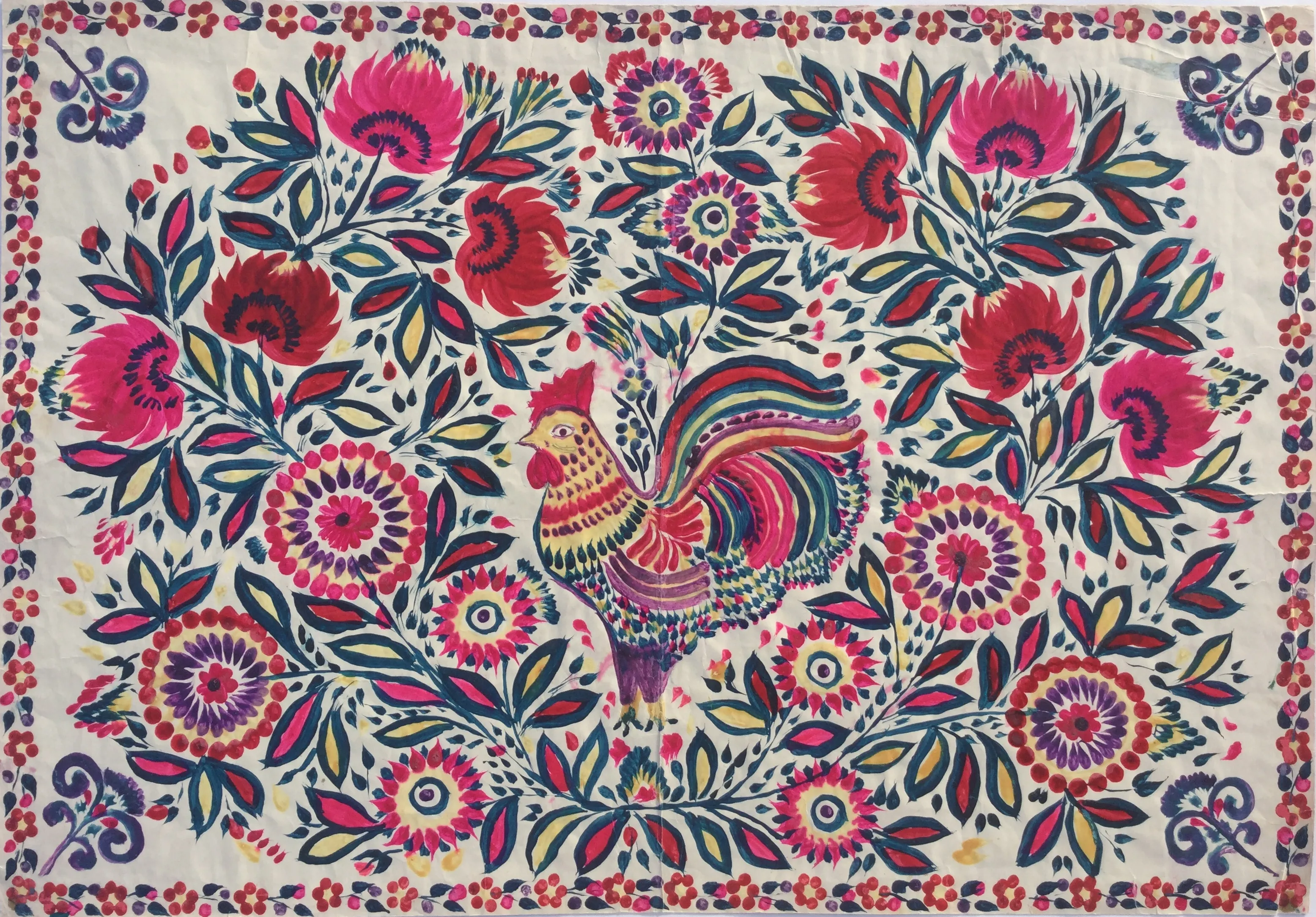
The legacy of Nadiia Bilokin is divided into two parts: traditional floral painting and genre paintings. In her ornamental works, she deliberately preserved the style of ancient house painting: bright local colors, symmetrical balanced compositions, flowers that do not overlap each other but breathe freely on a white paper background. Unlike Tetiana Pata, who mixed colors, Bilokin only juxtaposed them-red with green, yellow with blue. She painted with homemade brushes made of cat hair - “kvachyky” - and never used a pencil.
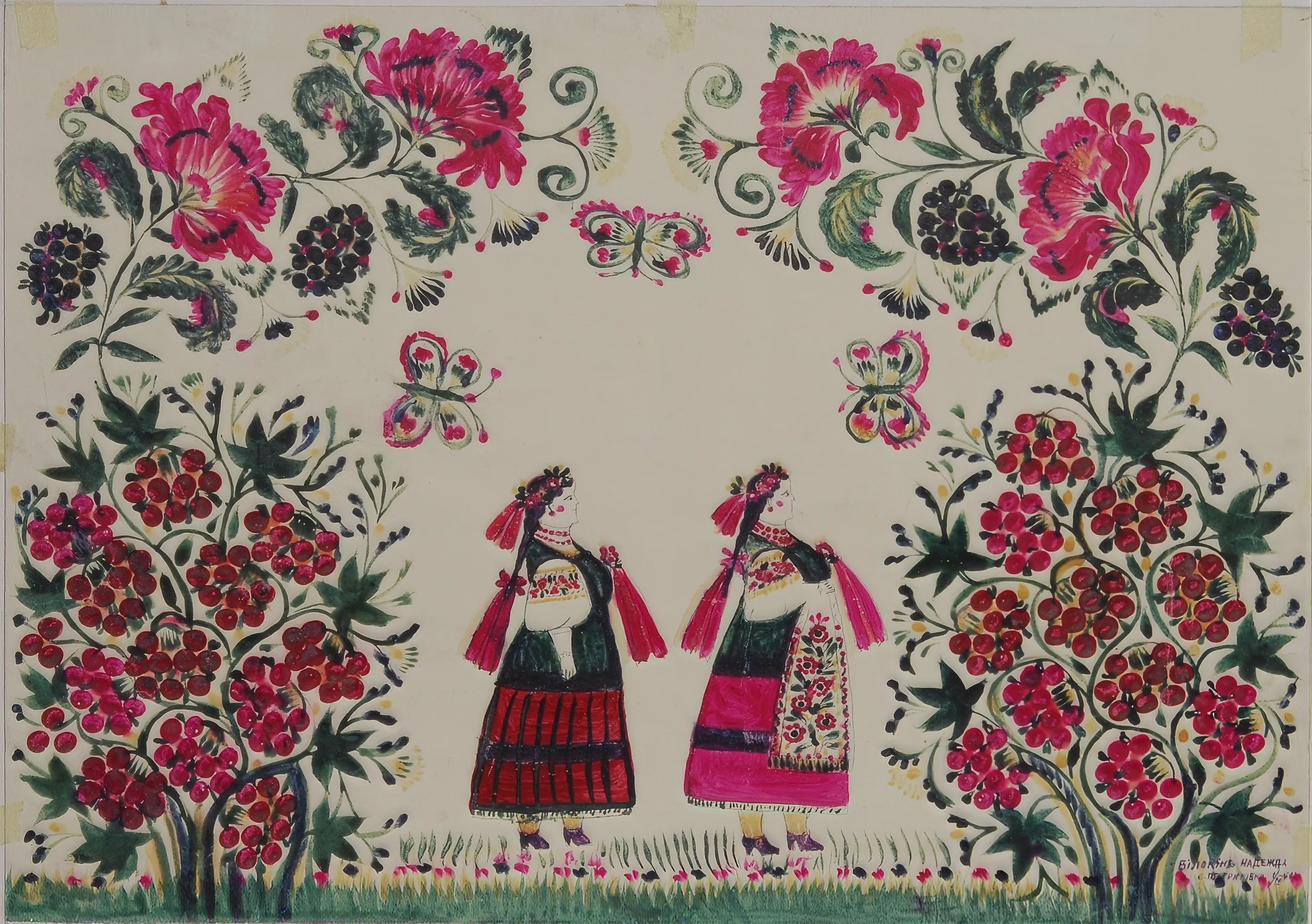
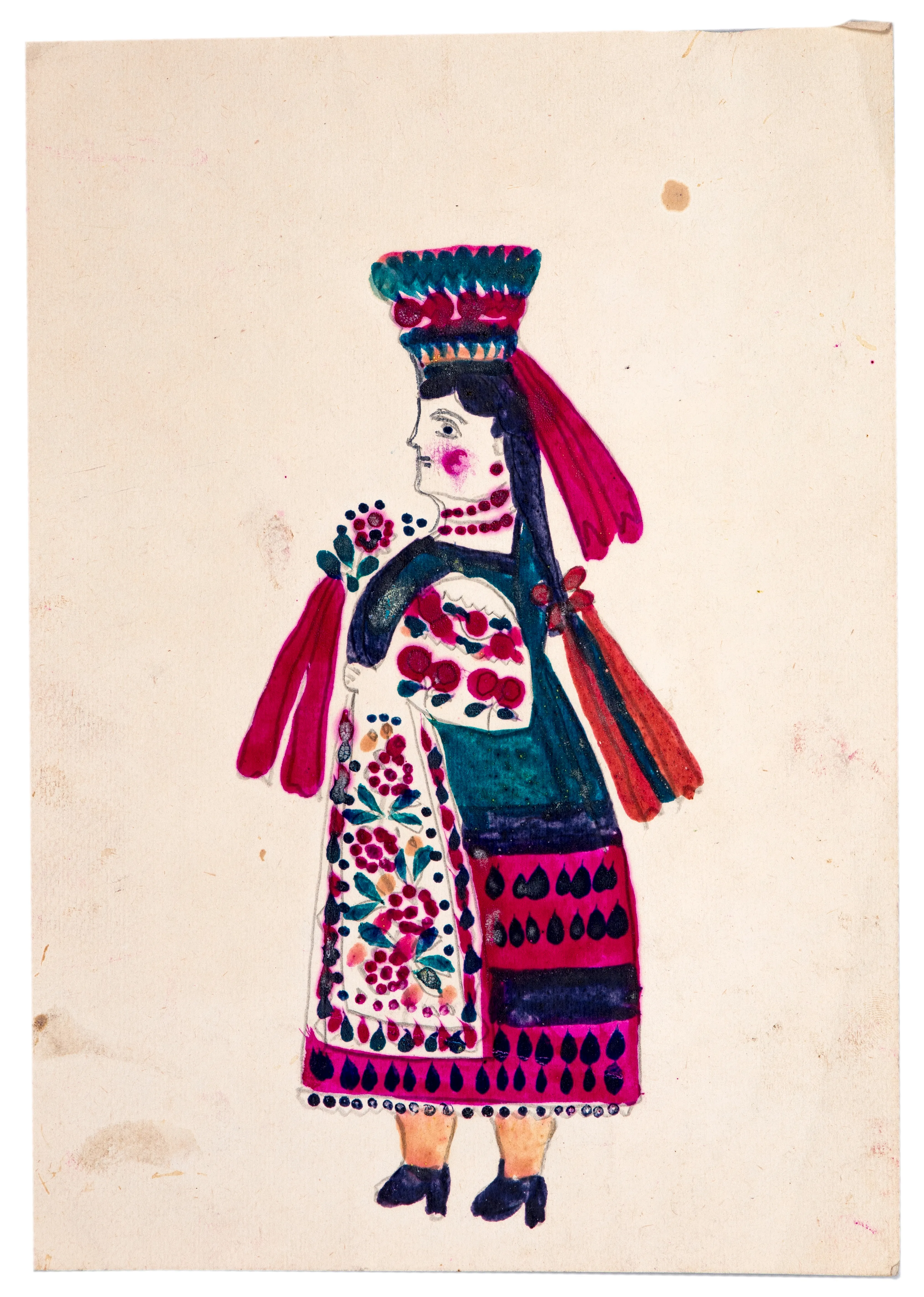
Favorite compositional schemes: “bouquet”, “flowerpot”, “branch”, “wreath”. She built flowerpots according to the tree-like principle - a central axis and symmetrical branches with flowers. Among her famous works: “Apples” (1963), “Girl in the Garden”, “Ducks Swim”, “Panel with a Firebird”, “Ukrainian Girls”.
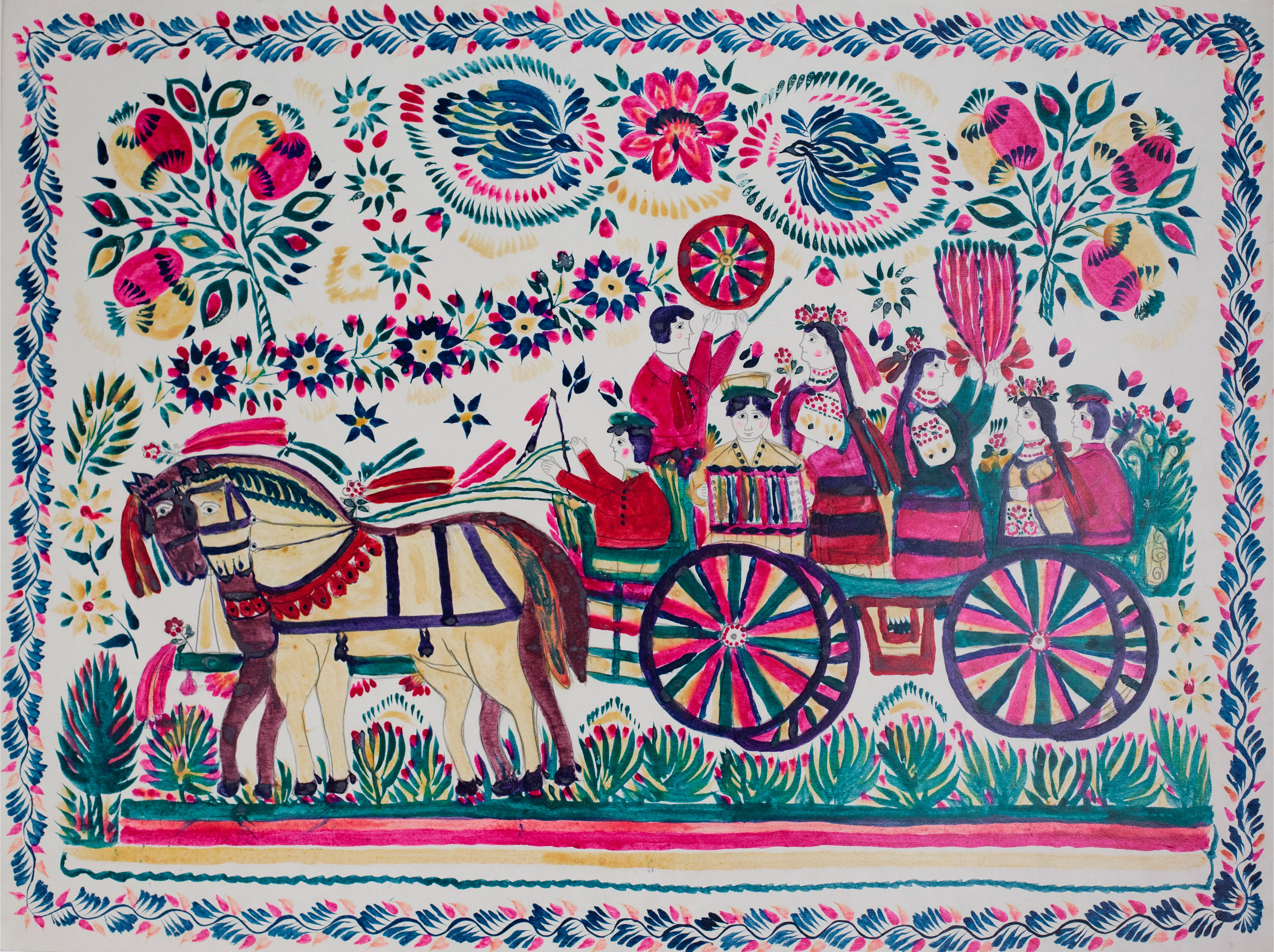
A special place in her work is occupied by her own genre - “wedding train”: colorful, singing scenes of a wedding procession, which in the Naddniprianshchyna was called “train”. In 1961, for the anniversary exhibition in honor of Shevchenko, she created two panels and a towel depicting the poet.
Recognition
Master of Folk Art of the Ukrainian SSR (1936). Member of the Union of Artists of Ukraine (1962). Participant of republican, all-Union and international exhibitions.