Biography
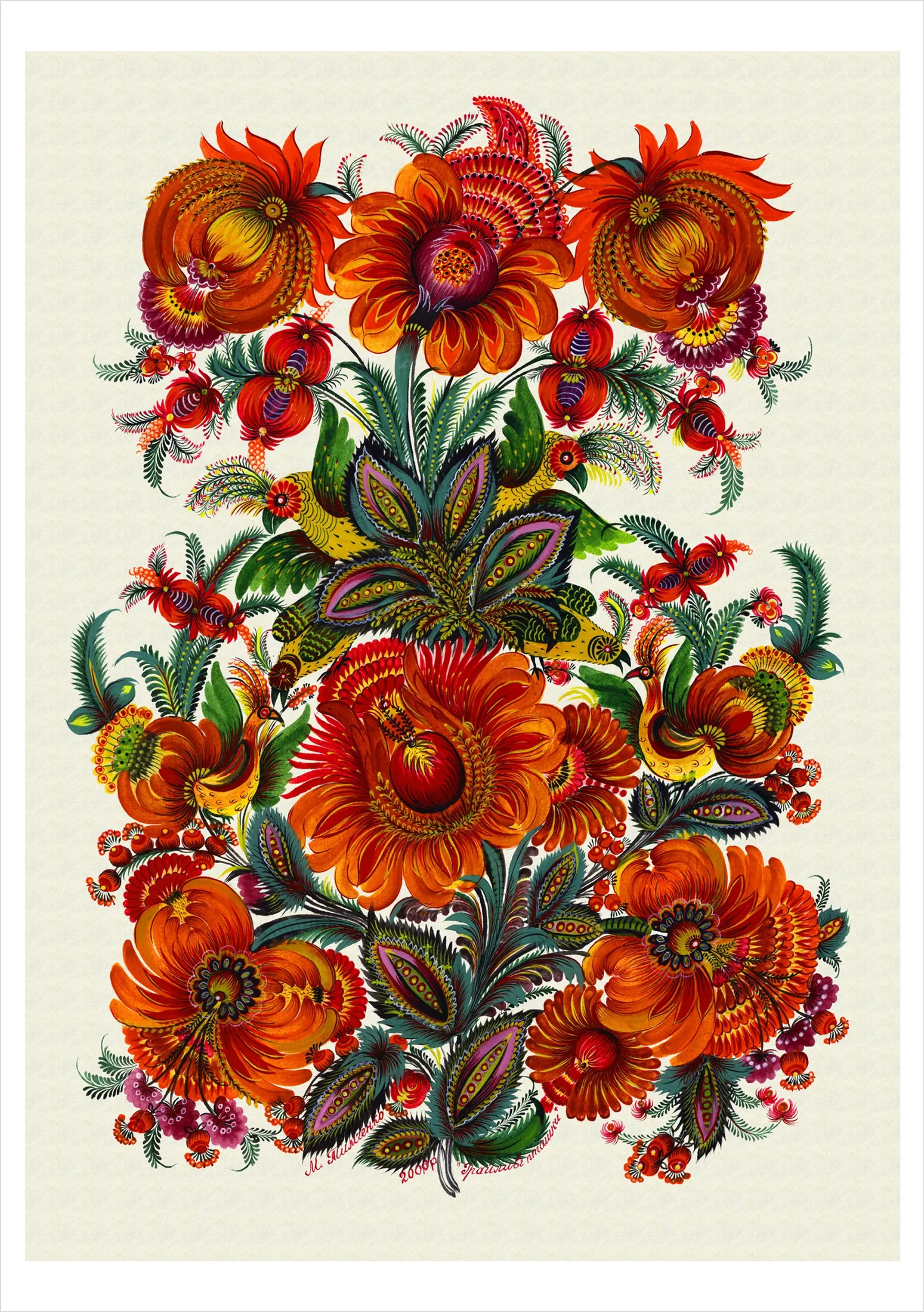
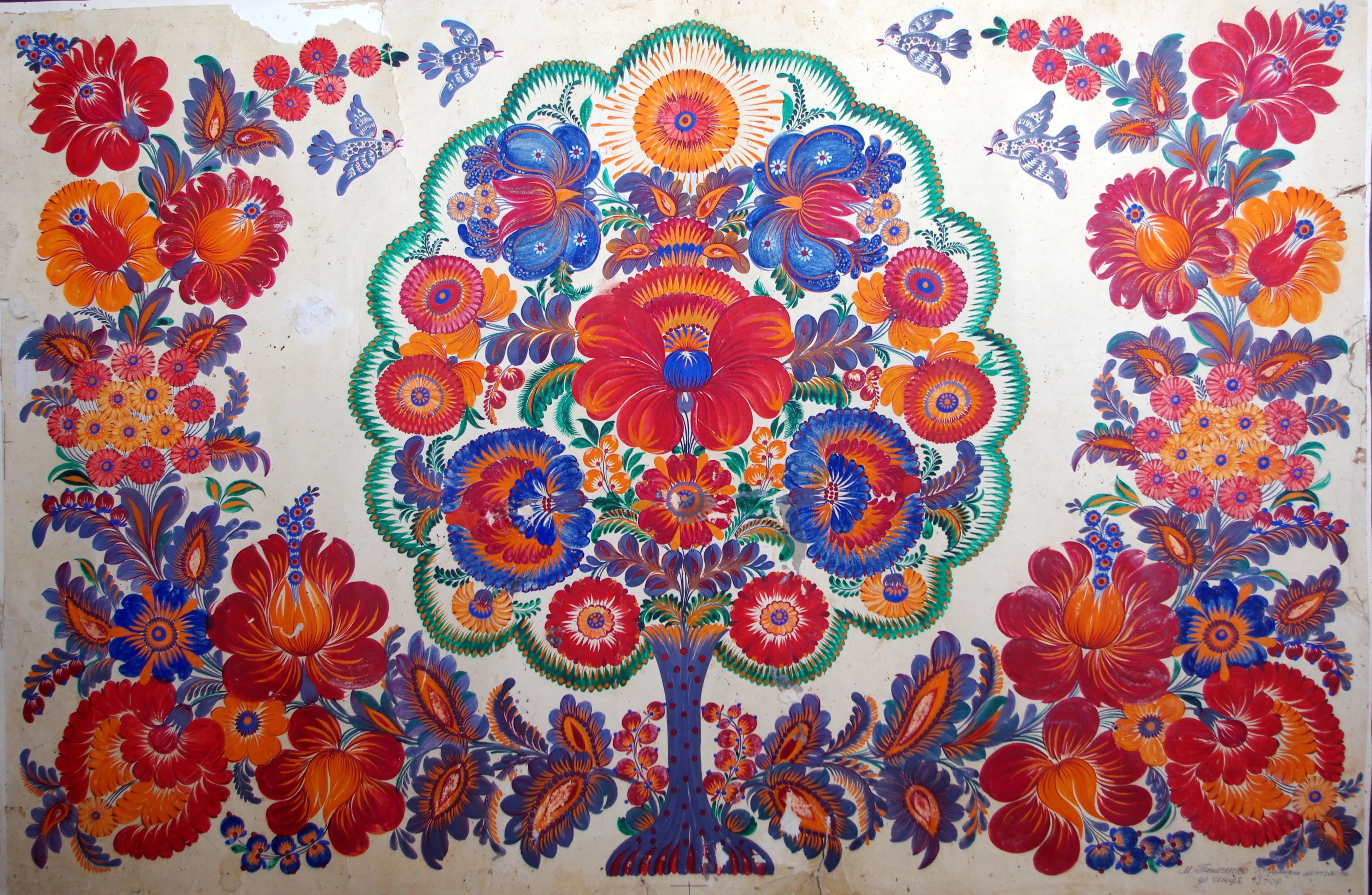
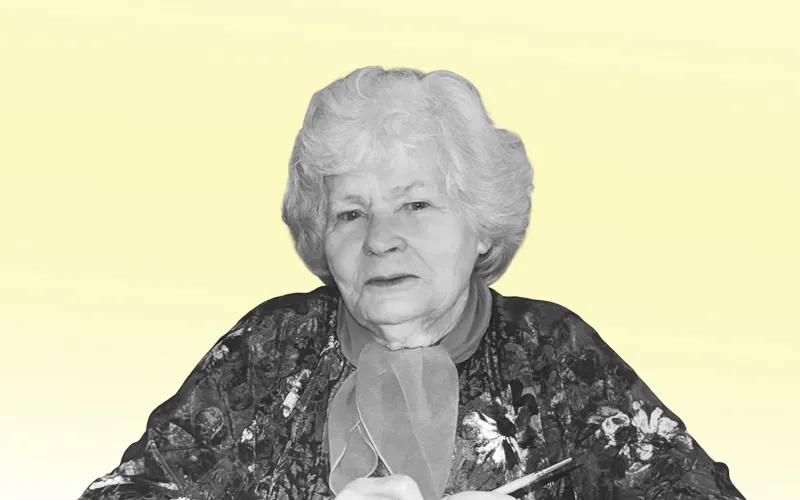
Marfa Ksenofontivna Tymchenko was born on March 25, 1922, in Petrykivka to a peasant family. Her mother, Oleksandra Medianyk, was a well-known embroiderer in the village. Marfa started painting from an early age, in the open air, on the black soil of the garden, which she plucked from the grass every day and watered at night to allow the soil to settle. Her mother made her first brushes out of cat hair, as is customary in the Petrykivka tradition.
Her first teacher was Oleksandr Statyva, a local school art teacher and the future founder of the Petrykivka Art School. In 1936, it was he who selected fourteen-year-old Marfa for the entrance exams to the newly opened school of decorative painting. Tetiana Pata became her mentor for two years of study. In the same year, 1936, the student’s works were sent to an exhibition in Kyiv, and she received the first prize.
After school, she attended the Kyiv School of Masters of Folk Art (1938-1940), then worked at the Korosten Porcelain Factory, where she first turned to porcelain painting. In just six months, she was back in Petrykivka, working on a collective farm. in 1944, she returned to Kyiv to study at the Institute of Decorative and Applied Arts of the Academy of Architecture of the Ukrainian SSR. From 1952 until the end of his career, he worked at the Kyiv Experimental Ceramic and Art Factory.
In 1979, together with her husband, the artist Ivan Skitsiuk, she decorated the interior of the Kyiv store “Skazka” - fifty fairy-tale scenes painted by hand. When these murals were hidden behind layers of plasterboard in the early 2000s, the octogenarian artist came to the store and cried.
She died on March 26, 2009 in Kyiv, the day after her eighty-seventh birthday.
Artistic Practice
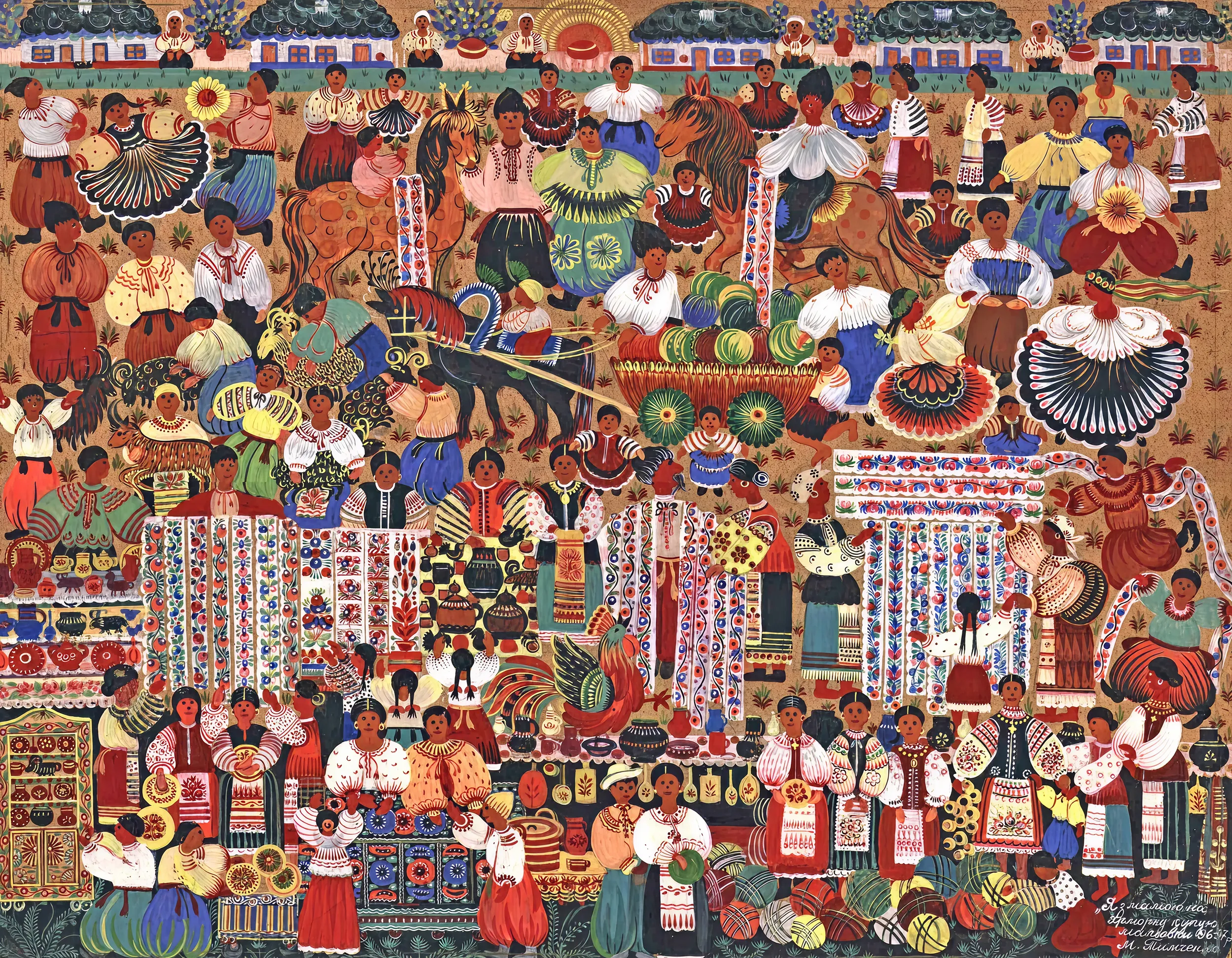
Marfa Tymchenko is a unique phenomenon in Petrykivka art: she felt equally at home in folk ornamentation and among professional artists. This gave rise to her own style, which does not fit into any simple category.
Starting in the 1970s, along with traditional Petrykivka painting on porcelain, she painted narrative landscapes in a completely original manner based on the principles of Petrykivka but free from its canons. Plants, birds, people, and animals in her works turn into strange fantastical creatures that inhabit the magical space of the imagination.
Her works include paintings of the cabins of the Taras Shevchenko and Mykola Gogol steamers, a decorative dish called Richness (1970), and a series of works based on Shevchenko. Soviet leaders presented vases painted by her to Richard Nixon, Mao Zedong, Fidel Castro, and Josip Tito. Her daughter Olena Skitsiuk and granddaughter Olena Kulyk continue the family artistic tradition.
Recognition
People’s Artist of Ukraine (1977). Winner of the Taras Shevchenko Prize and the Kateryna Bilokur Prize. Member of the Union of Artists of Ukraine (1950), the Union of Architects of Ukraine (1947), the National Union of Masters of Folk Art of Ukraine (1994).