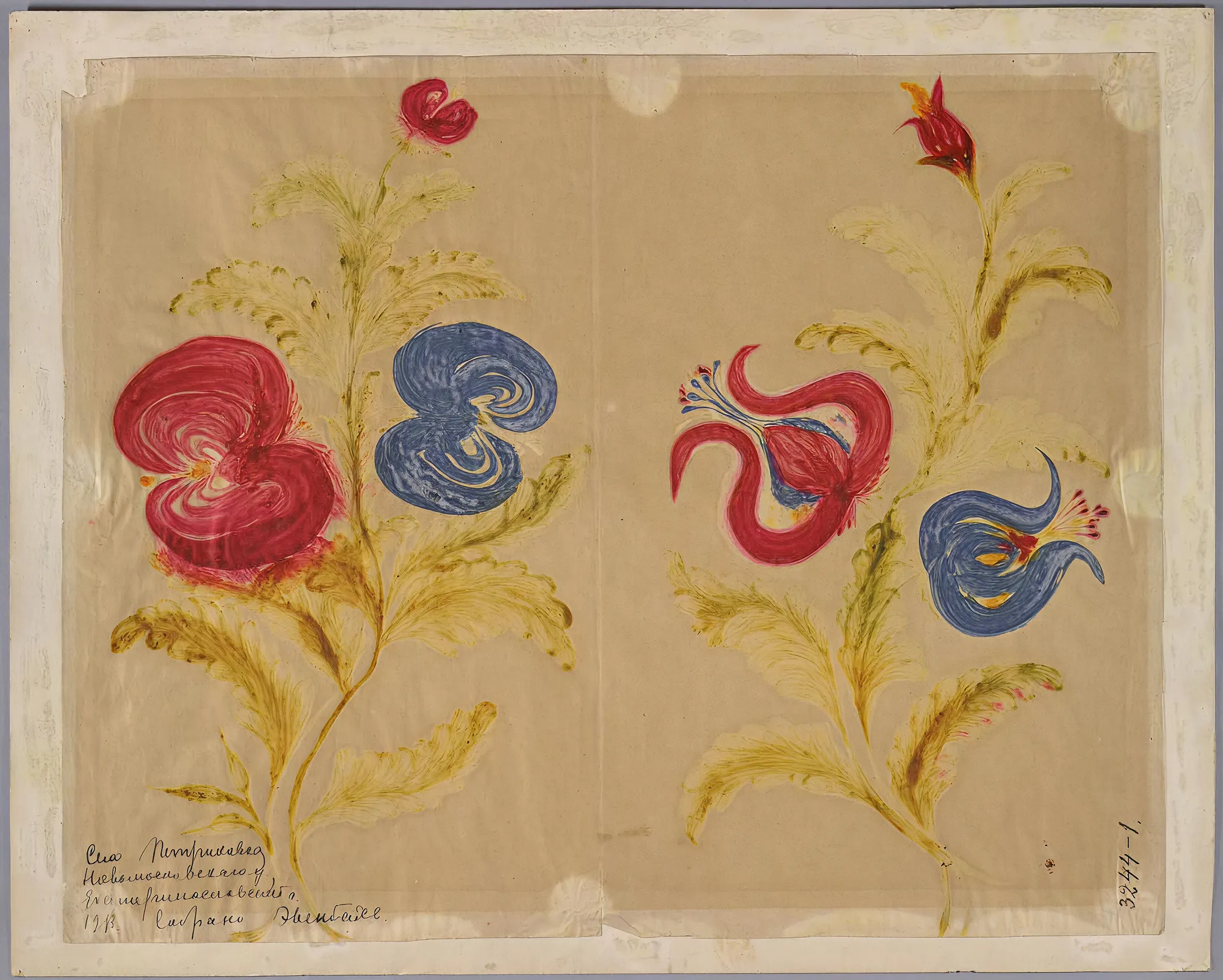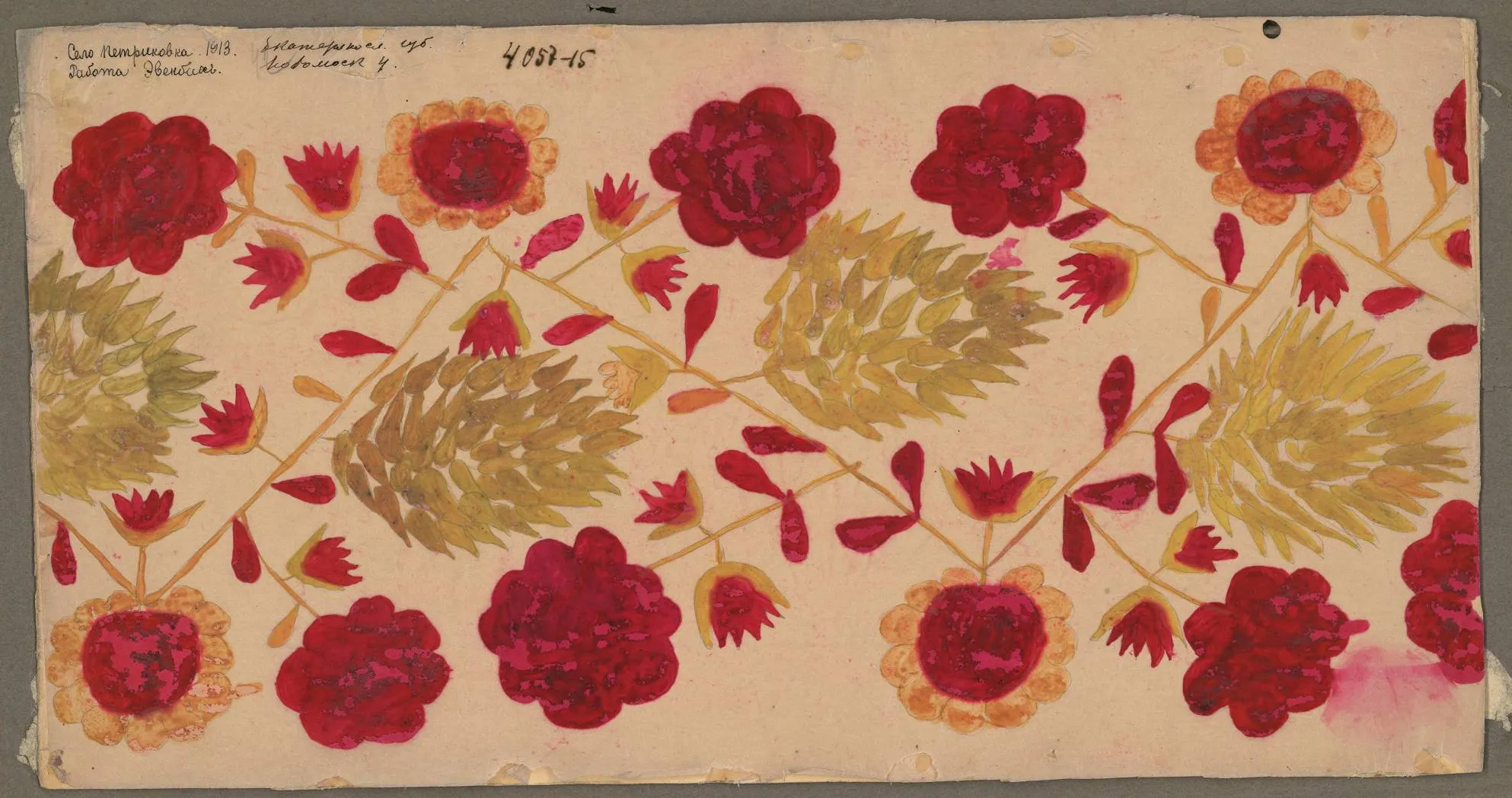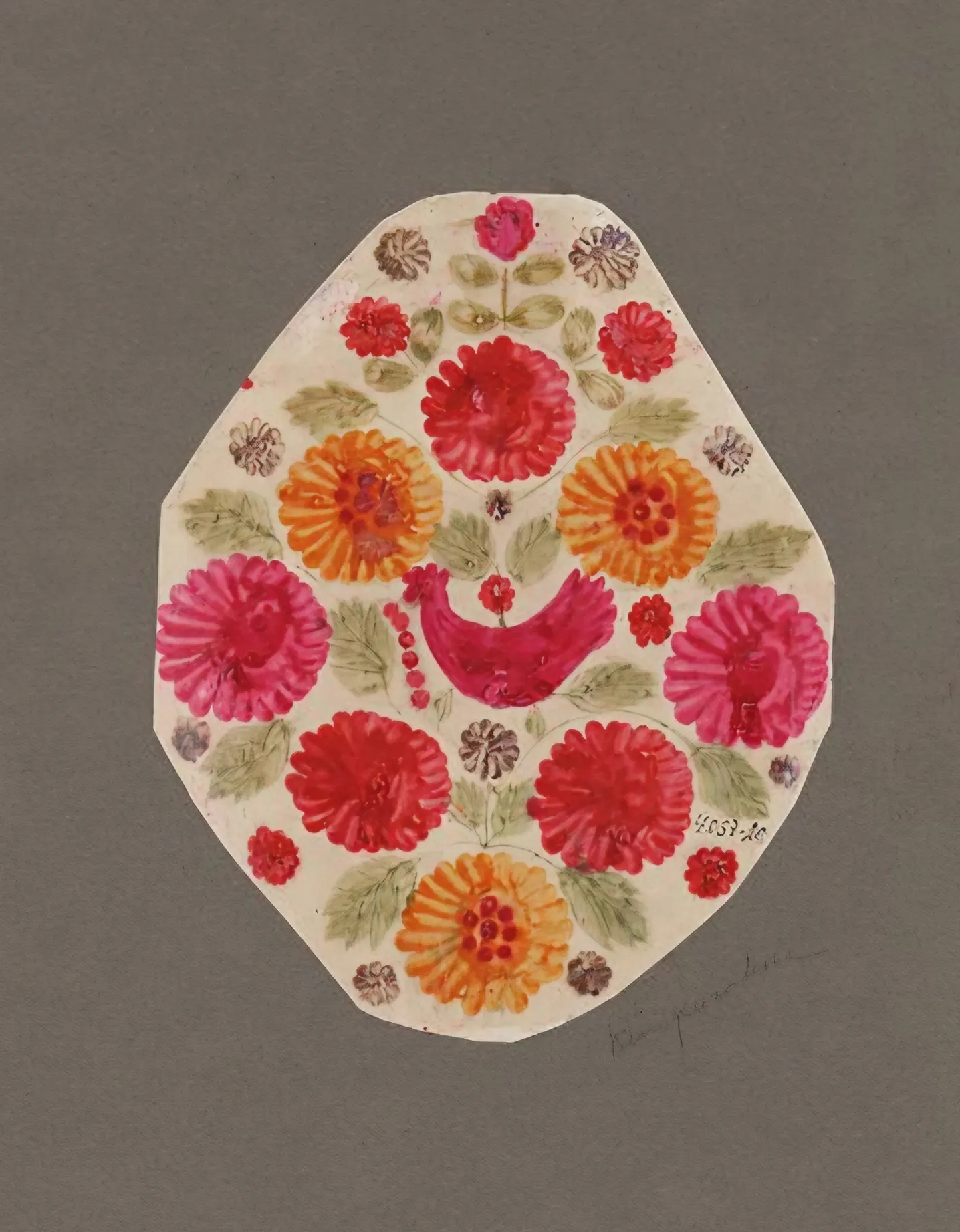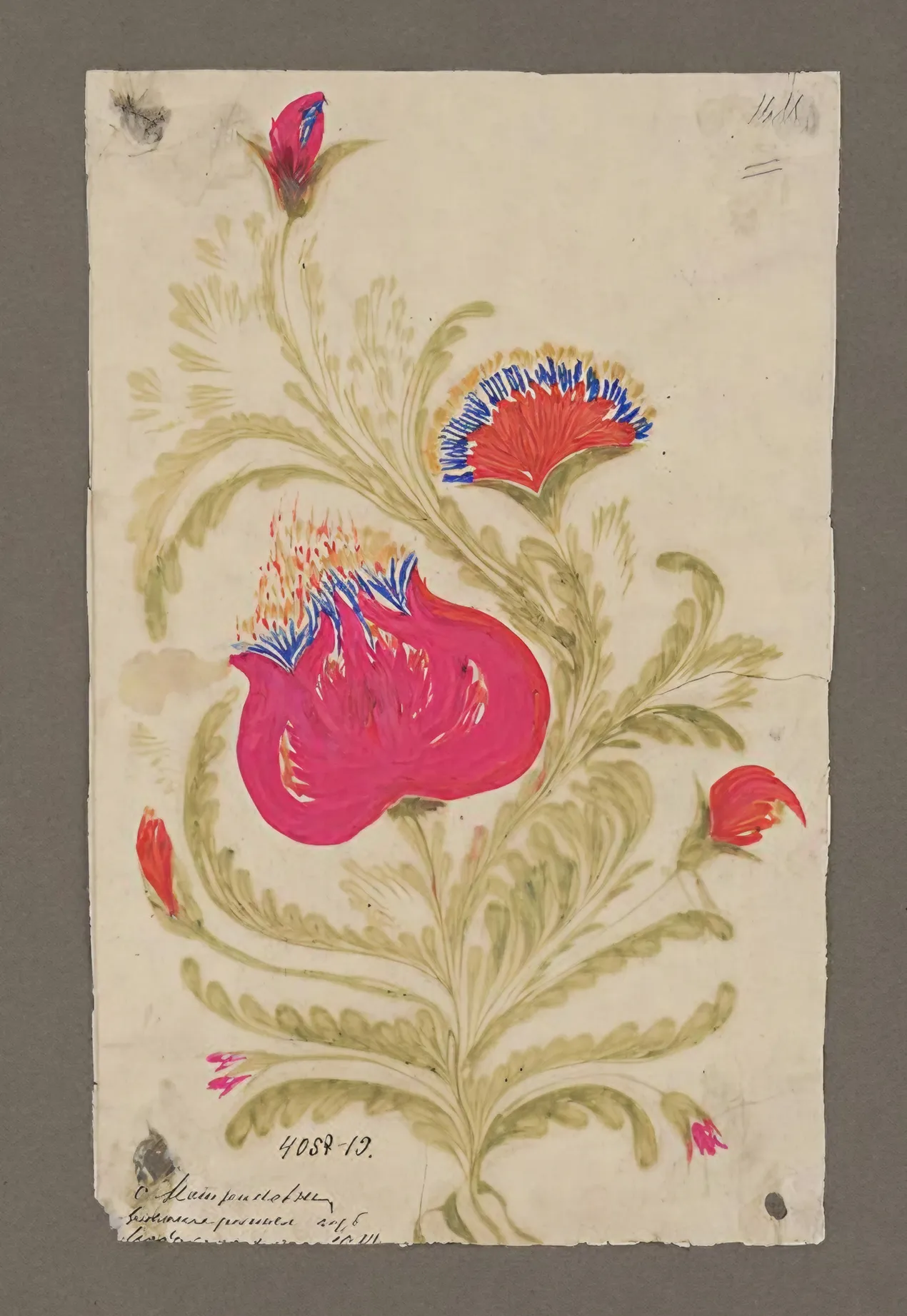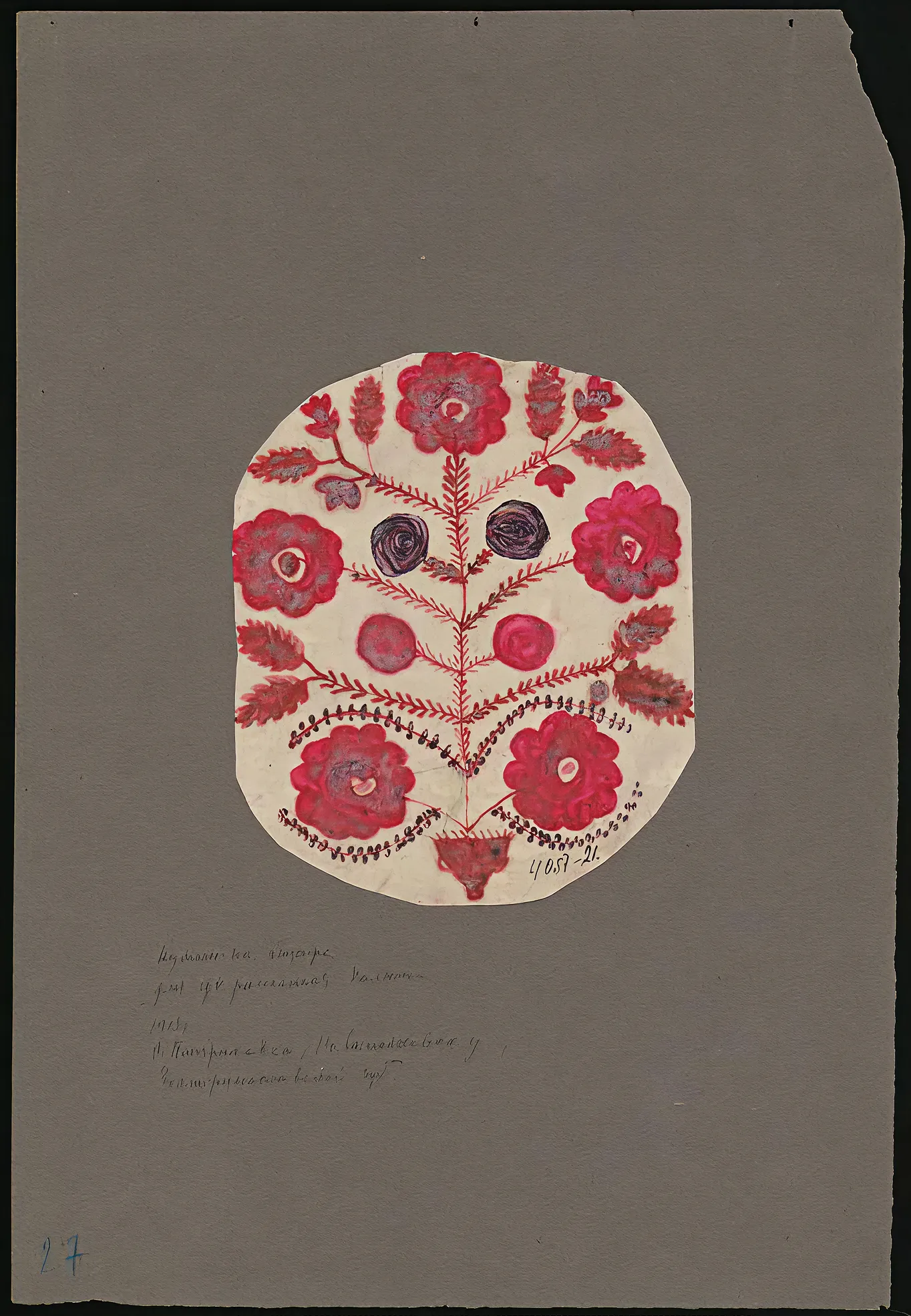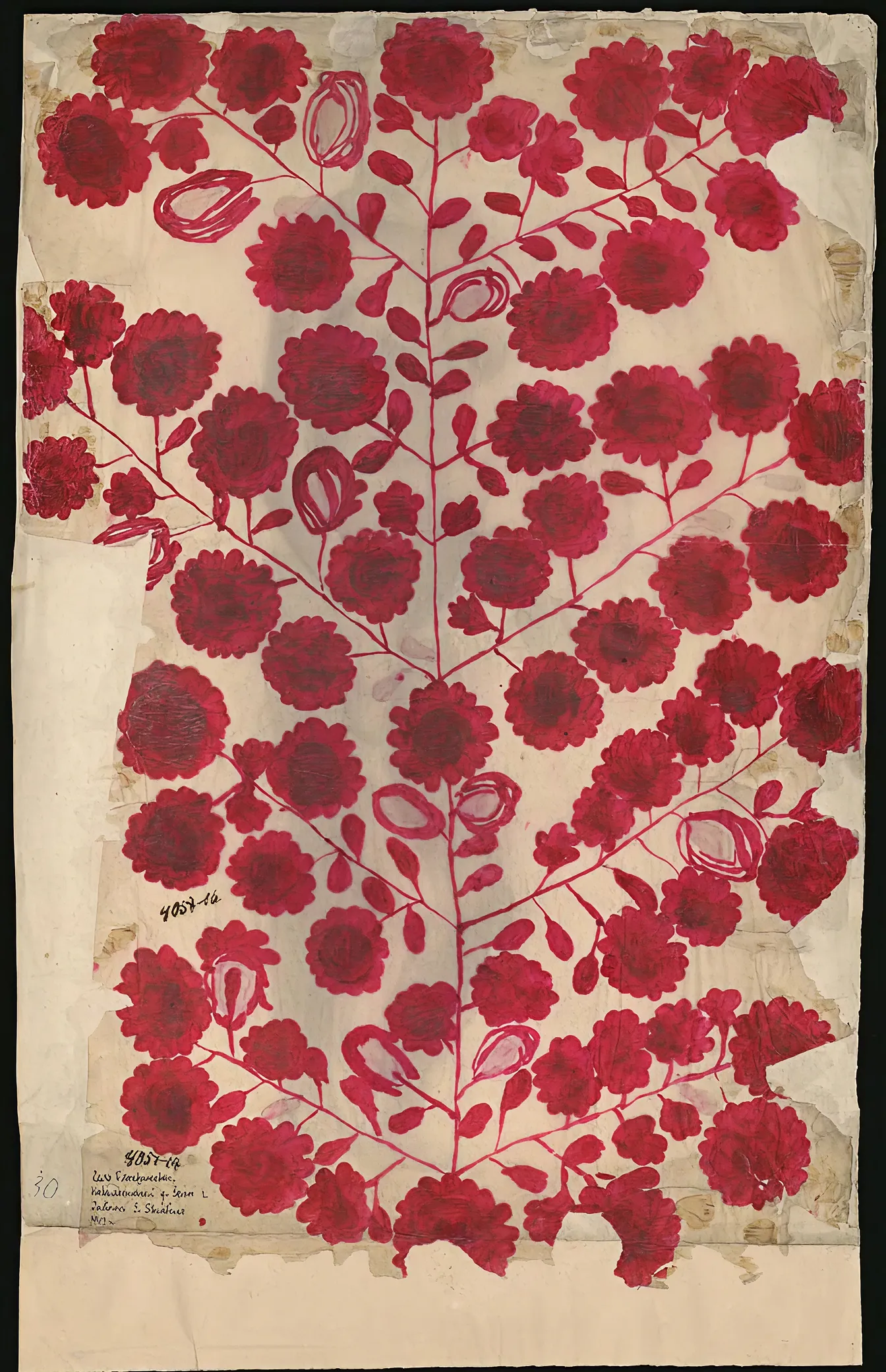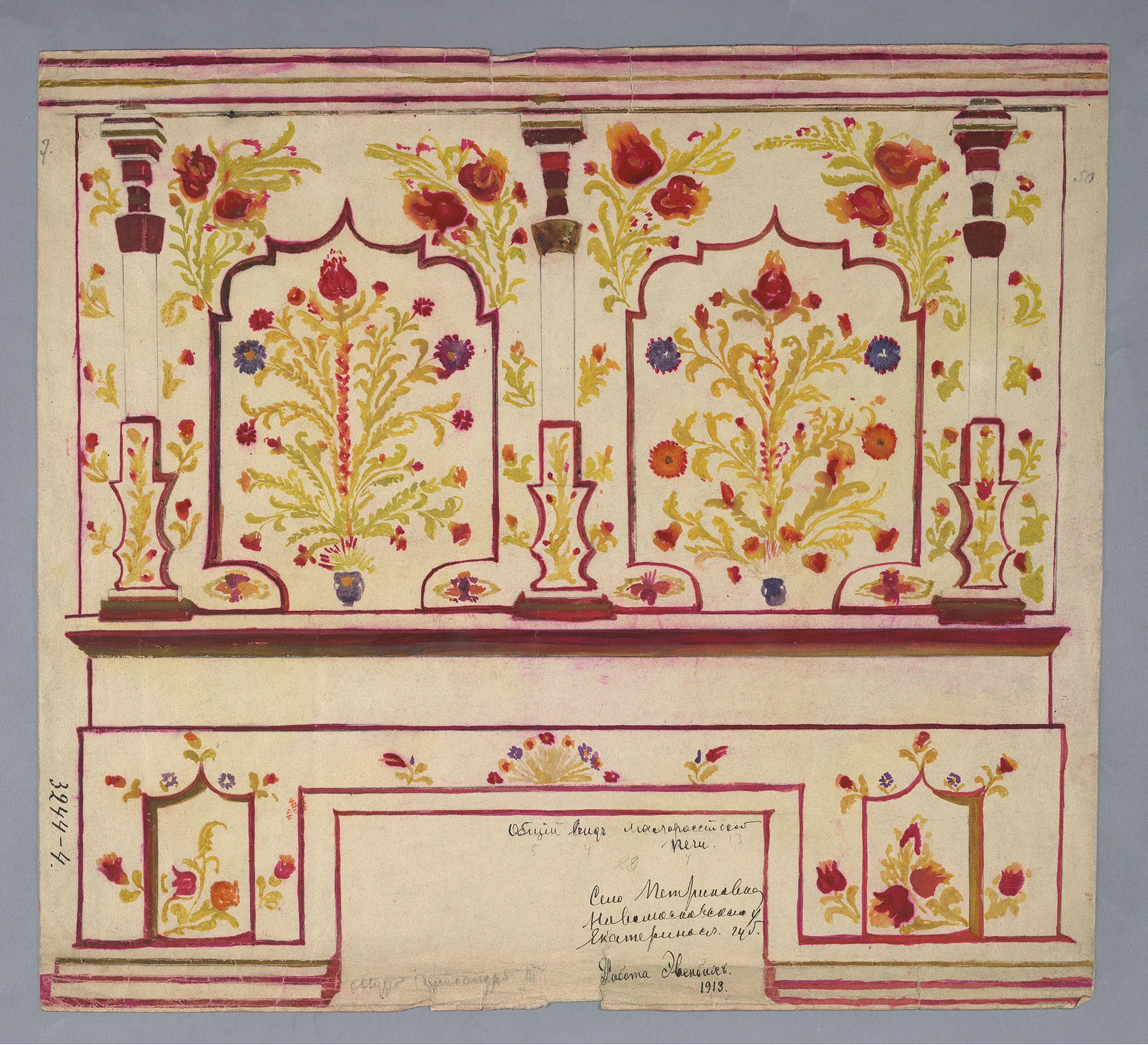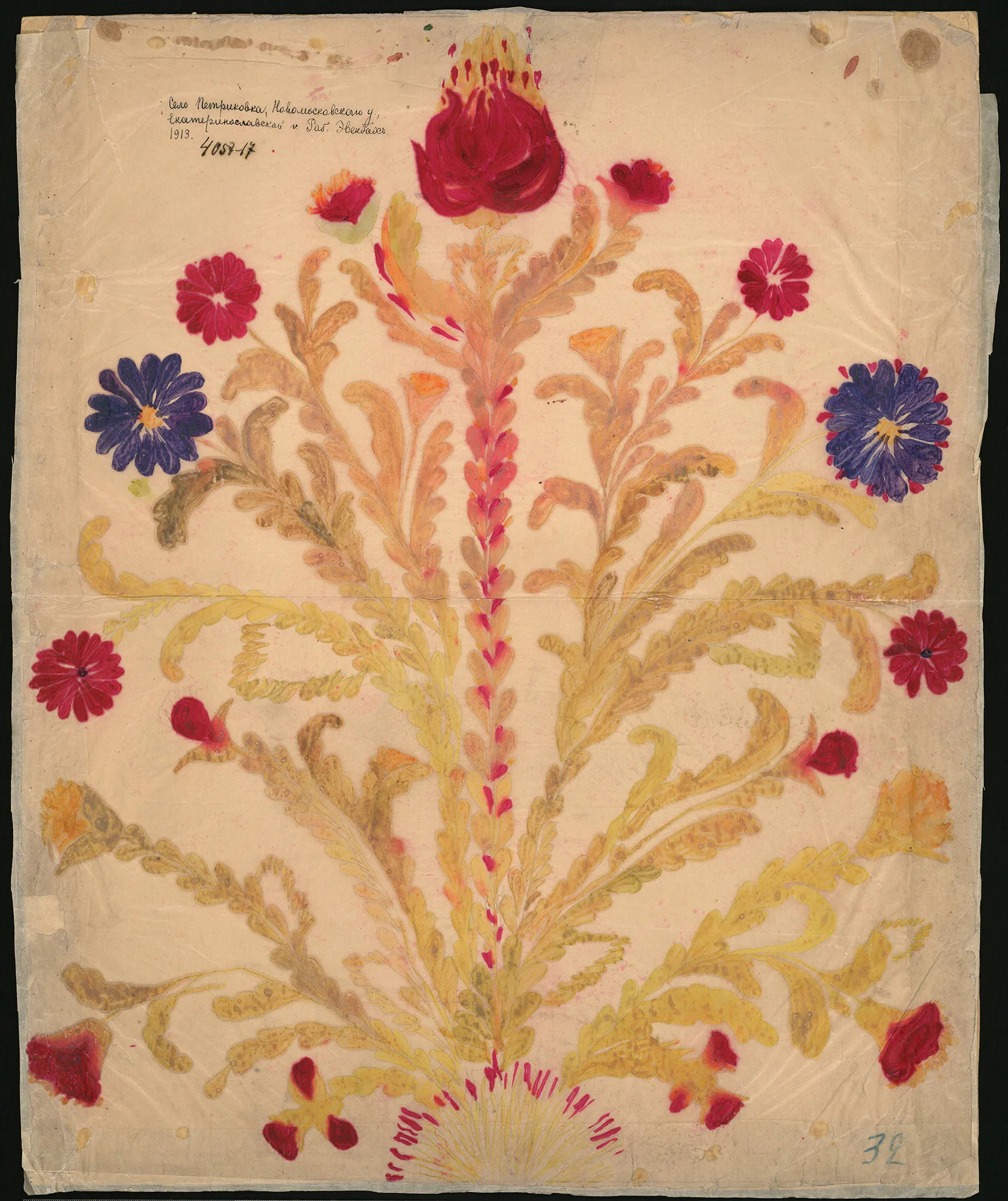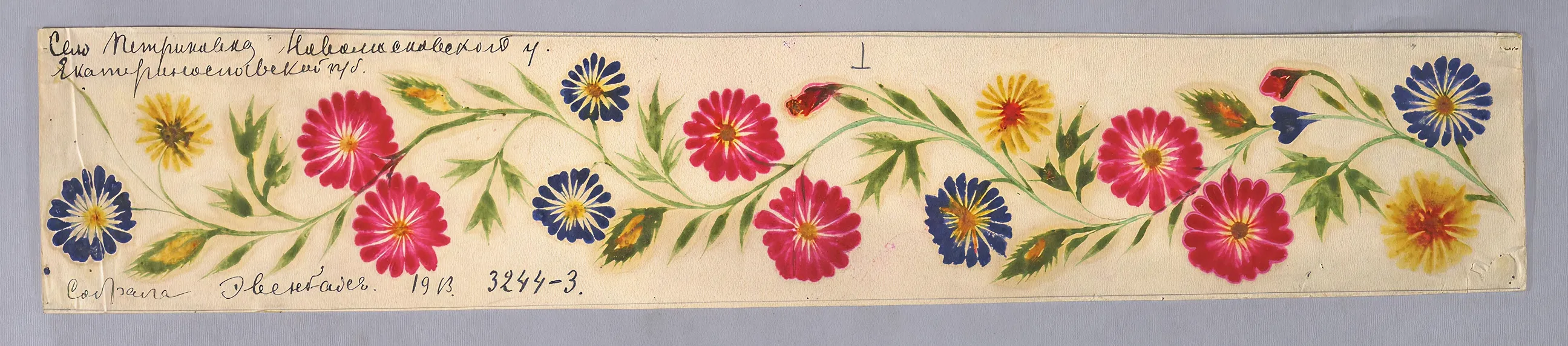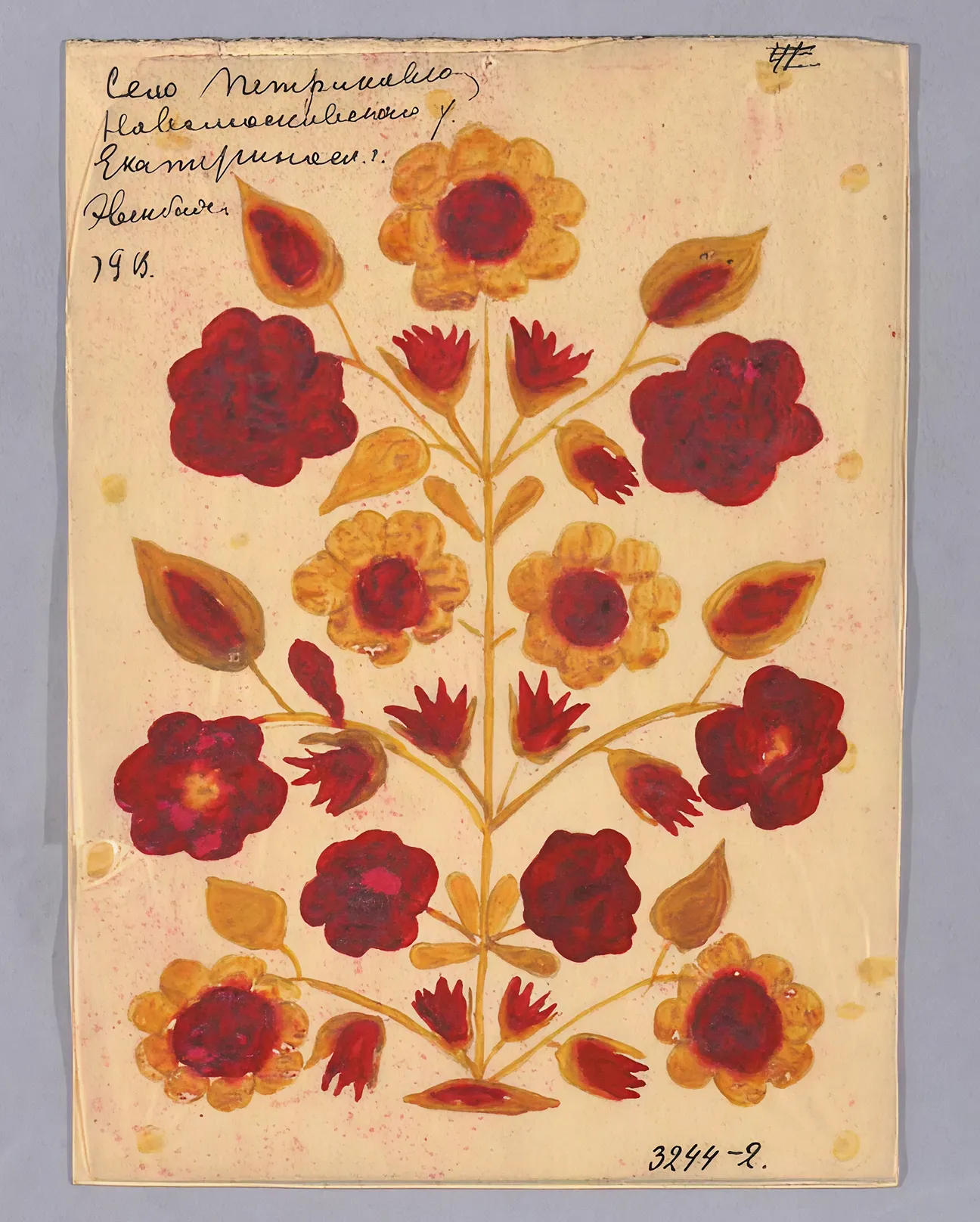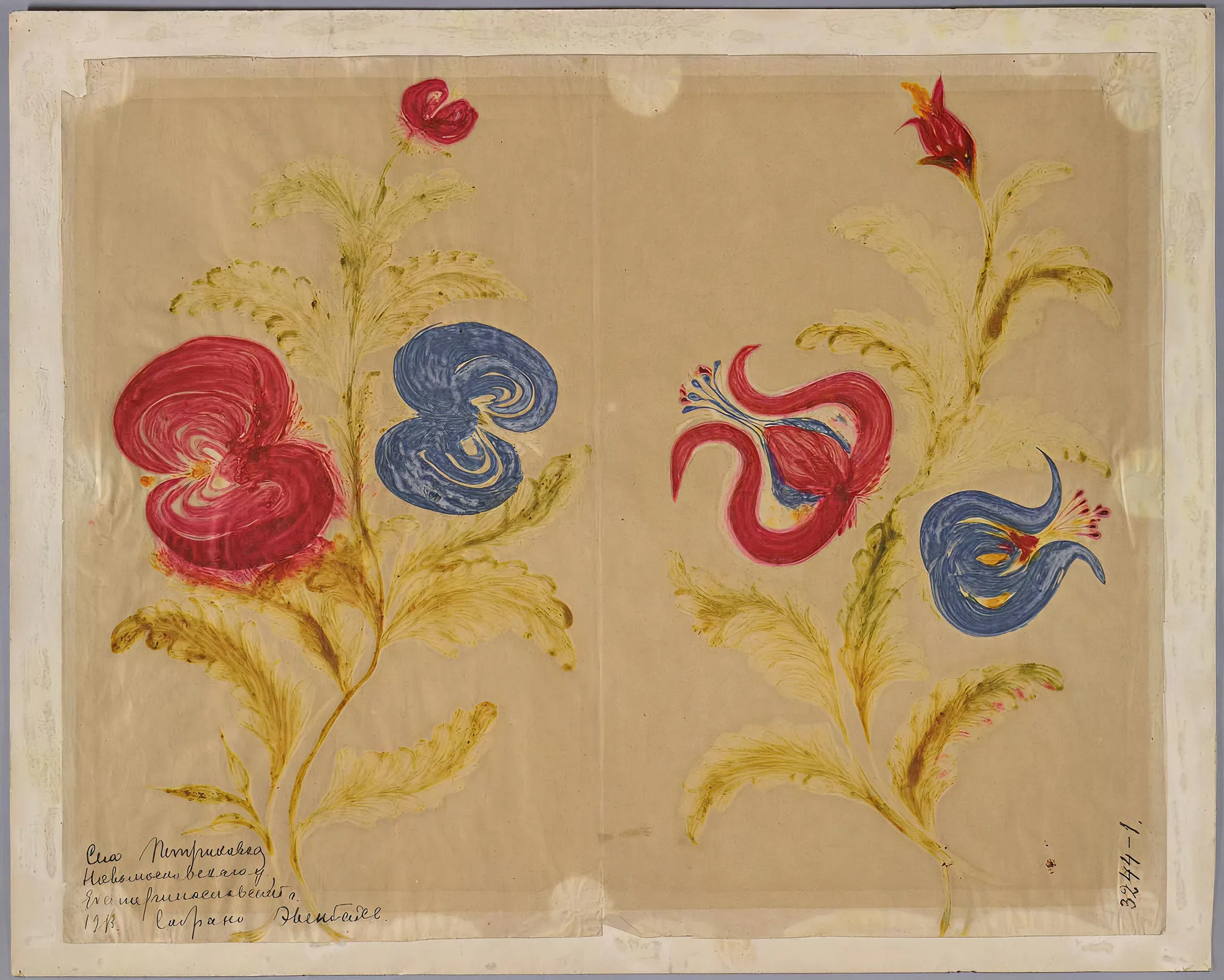
In 1913, commissioned by historian Dmytro Yavornytsky, artist Yevheniia Evenbakh travelled to Petrykivka to do something no one had done systematically before — record the painted decoration of village houses exactly as it existed, directly on site, from life.
These are not stylizations or reconstructions from memory. They are direct copies of ornaments that, at the time, actually covered the walls, stoves, and front sections of Petrykivka houses — most often painted by local women with no formal art training, as part of an annual household ritual of refreshing the home before holidays. Evenbakh copied a fragment of a stove’s painted decoration, decorative running friezes, and flower and pattern compositions — all of it the kind of work that would normally disappear with the next year’s whitewashing.
This is precisely what makes these ten sheets so valuable. They are the earliest reliable record of what Petrykivka painting actually looked like before it became an easel art form, entered museum collections, and began to be taught as a tradition with named masters and schools. Comparing these sketches with the later work of Tetyana Pata and her students makes it possible to trace what in the ornament survived largely unchanged, and what was born later, as the personal interpretation of subsequent generations of artists.
For researchers, this is a primary source in the fullest sense — material through which one can study the compositional principles, characteristic motifs, and colour palette of the painting before the modern idea of “classical” Petrykivka took shape.